About Parc Natural del Montgrí, les Illes Medes i el Baix Ter
The Costa Brava has several protected areas of managed resources, with one of the natural spaces located between two regions: Baix Empordà and Alt Empordà. This is the Montgrí Natural Park, the Medes Islands and the Baix Ter.
In 2010, this area was officially declared a natural park, which has considerable dimensions. And it encompasses almost eight thousand two hundred hectares in total, with two thousand of them being only marine.
Thus, we are dealing with a natural park that combines land area with marine type areas, forming a unique and varied ecosystem that visitors to this protected area enjoy to the fullest.
Landscape
One of the most notable aspects of the Montgrí Natural Park, the Medes Islands and the Baix Ter is undoubtedly the landscape it boasts, which draws attention for being very heterogeneous, a characteristic that is not usually present in the natural parks of the Costa Brava.
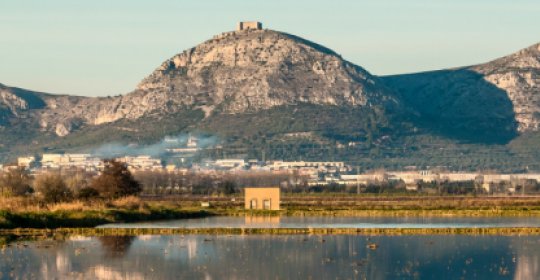
There are several very representative elements of the landscape that forms part of the protected space, starting with the most popular of all: the Montgrí massif. It is home to various peaks that allow for privileged views, especially Montplà thanks to its height of more than three hundred meters.
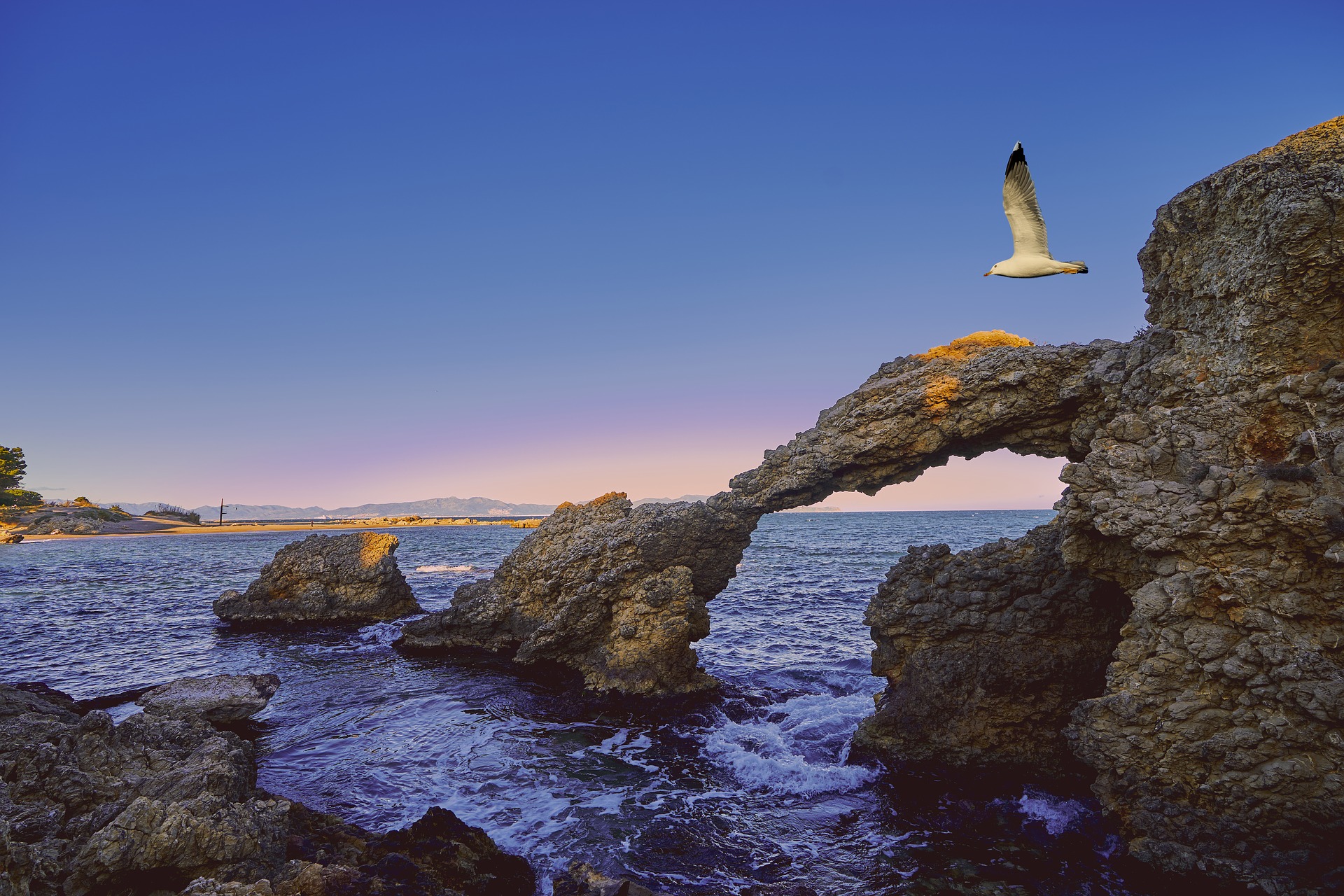
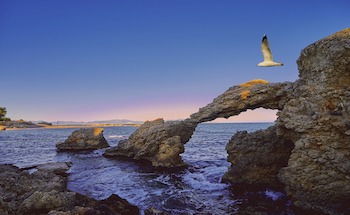
Along the coastline, spectacular cliffs can be observed. In no other area of Catalonia can similar limestone geographical accidents be seen that barely reach a total height of one hundred meters.
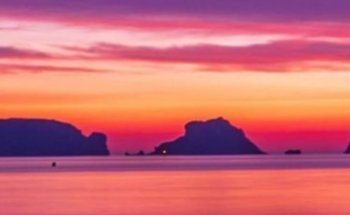
The sea itself has been responsible for shaping the landscape of the Montgrí Natural Park, the Medes Islands and the Baix Ter over many years. Beyond the coves that visitors enjoy so much, the list must include small islets and caves.
Flora
One of the main reasons why the landscape of this protected area is so beautiful is the presence of a varied flora, which must adapt to conditions that are anything but pleasant for the plant elements: a lot of wind, high salinity levels, etc.
In the Medes Islands, there is a huge floral diversity that has not been intervened by humans, with natural matter and seabirds being the only influencing factors on certain nitrophilous grasses.
Leaving the marine surface and placing feet on the land, there is a great presence of hibiscus and other malvaceae. Although they can also be found in certain areas of Catalonia, only those in the Montgrí Natural Park, the Medes Islands and the Baix Ter are located in a habitat that can be considered their own.
The olive groves can also be seen in the protected area, which owe their presence to the relief, the stone-filled soil, and a climate that is very much typical of the Mediterranean zone. All this also leads to the existence of forests filled with vegetation.
Continuing with respect to the Mediterranean, the presence of a type of flora that is not usually found in it: vascular-less bryophytes, which proliferate mainly in areas with a high percentage of humidity, is noteworthy.
Moreover, some of the cliffs that provide stunning views of the sea house a flora that has little in common with the rest of the natural park, translating into a biodiversity level achieved by very few protected spaces in the Costa Brava.
Fauna
The flora is not the only diverse element, as exactly the same can be said of the fauna. A distinction must be made between terrestrial and underwater fauna, with the latter boasting a greater biological diversity.
Underwater
The seabed, following the example of the natural park in general, stands out for being very heterogeneous. This translates into different species being able to adapt perfectly to a very diverse ecosystem that, as expected, is highly protected.
Thanks to divers and other visitors strictly respecting this regulation, the resources of the seabed are still intact today, with some hard-to-see fish being frequently spotted in other parts of the world.
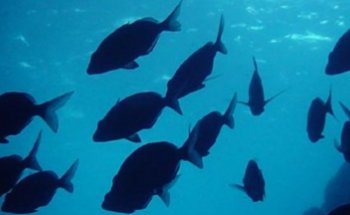
Specifically, certain commercially valuable fish are the best possible example of how well the rules for protecting the local underwater fauna work. Fishermen and divers do not affect the activity of some very common fish in the Montgrí Natural Park, the Medes Islands and the Baix Ter: corvallos, imperial sardines, bass, doradas, grouper, and a long etcetera.
The presence of specific fish and other marine animals in the natural park also leads to the occasional appearance of some pelagic type predators. Among the most common are bluefin tunas and eagle rays.
Beyond fish, one of the reasons that leads many divers to want to explore the seabed is the presence of multitude of corals that are really beautiful in reddish tones, as can similarly be said of gorgonians. The list of coral-like elements also includes sea dates, nacre, and sponges.
All the previously described fauna attracts a species that, from time to time, can also be spotted in the Montgrí Natural Park, the Medes Islands, and the Baix Ter. We refer to the bottlenose dolphins that usually make their presence known in the area in groups of at least ten cetaceans.
Terrestrial
There are many protected bird species that visit this natural park of the Costa Brava, using it as if it were a refuge. A clear example is the rupicolous, as well as both raptor and seabird species.
Both on the islets that are part of the Montgrí Natural Park, the Medes Islands and the Baix Ter, and in the coastal area there are royal owls, western jays, kestrels, and even peregrine falcons. For their part, sparrowhawks and eagles breed in the protected area, taking advantage of the fact that garrigues are ideal for this.
It is noteworthy that there are no other spots in the Catalan autonomous community with as many cave bats, although the species with the greatest abundance is the Cortés gull.
Re-establishing the comparison with other parts of Catalonia, this natural park is one of the places with the highest presence not only of huairavos, but also of common herons and cattle egrets.
Finally, almost fifty percent of the shaggy cormorants in Catalonia can be found in the Montgrí Natural Park, the Medes Islands, and the Baix Ter. This is a result of the holes in certain slopes very close to the coast, which are used for breeding.
Itineraries
Of all the natural parks in the Costa Brava, the Montgrí, the Medes Islands, and the Baix Ter is one of the most varied, as demonstrated by its almost twenty distinct itineraries that can be practiced while hiking or cycling. Whatever your choice, the experience will be unforgettable, as will be the case when following the underwater routes. Below we will describe some of the most recommended itineraries.
From Cala de l’Illa Roja to Cala Moreta
In this natural park, there are a couple of coves connected by a route suitable for both experienced and amateur hikers, as the slope is only 210 meters. However, the duration is considerable, needing just over three and a half hours to cover 13.2 kilometers.
The route starts at Cala de l’Illa Roja, a nudist beach known mainly for its crystal clear water. Eventually, the itinerary ends at Cala Moreta, another area where nudism is also allowed.
From Cala del Salpaig to Punta Ventosa
If you like circular routes that almost everyone can do, you will love this itinerary. In about three hours, it is possible to complete the eleven-kilometer route whose slope reaches 230 meters.
Since it is an itinerary that starts and ends at the same point, Cala del Salpaig, a good idea is to end the activity with a good swim in this beach that is not usually too crowded.
From l’Estartit to the Castle of Montgrí
If you are an experienced hiker and are used to doing somewhat difficult routes, you will be capable of finishing this circular itinerary that requires a physical condition that meets the circumstances. The distance to be covered is almost nineteen kilometers.
The difficulty of the route is also due to the slope that exceeds four hundred meters. All this means that it will take almost six hours to complete the journey, but it is worth it if you want to discover one of the most important elements of the Montgrí Natural Park, the Medes Islands, and the Baix Ter.
How to get there
To get to the Montgrí Natural Park, the Medes Islands and the Baix Ter, the best way is to go to l’Escala or Torroella de Montgrí. The first of the municipalities can be reached by the AP-7, taking exit 5 which subsequently connects to GI-623. If you prefer the second locality, the exit from the AP-7 is 9A. In both cases, you will find very precise indications that will allow you to arrive without problems at the protected space.
Do you prefer public transport? In that case, you will enjoy quite good connections, which start with the train route from Barcelona to Portbou. Taking that line, you need to get off in Figueres. After that, you need to take a bus to the municipal entities that are part of the natural park.
Fees
Enjoying the wide and varied ecosystem of the Montgrí Natural Park, the Medes Islands, and the Baix Ter is free. However, if you want to explore the underwater depths, you will probably have to pay for the activity by hiring the services of a specialized company that provides you with the necessary material to dive into the depths of this highly biodiverse part of the Costa Brava.
Opening hours
- Monday: 9:00–14:00
- Tuesday: 9:00–14:00
- Wednesday: 9:00–14:00
- Thursday: 9:00–14:00
- Friday: 9:00–14:00
- Saturday: 8:30–13:30, 14:30–17:00
- Sunday: 8:30–13:30, 14:30–17:00
Parc Natural del Montgrí, les Illes Medes i el Baix Ter: Reviews

Fantastic experience: Genuine coast brava
Fantastic experience: Just a wonderful place to be!
Fantastic experience:
It has its charm all year round, but at this time of year with the rice harvest and the onset of autumn it is well worth going there. Like the storks that already know it and come there every year
Translated from Spanish
Fantastic experience: Beautiful coastal region with lots of nature, on land and in the sea. Very touristy in summer. Legendary islands where there is a lot of diving.

Fantastic experience:
Fantastic customer service.
Translated from Spanish

Fantastic experience:
Heavenly place ... last August
Translated from Spanish

Fantastic experience:
Nice ride in the fishing boat Núria from Estartit along the coast and the Medes Islands. 1 h. And 45 'in total. 22 eur / person. With stop for bathing. Recommendable!
Translated from Spanish

Fantastic experience:
Very pretty I will be back
Translated from Italiano
Fantastic experience:
A beautiful place. Too bad there are people who don’t respect the demarcation of recovering dunes. They pass over it, soak up the sun and break the stakes and ropes
Translated from Spanish

Fantastic experience: I like it a lot, salmon
Fantastic experience: A fantastic place
Fantastic experience: Excellent
Fantastic experience:
Sea, Mountain, Forest
Translated from Spanish
Fantastic experience: Walk
Fantastic experience:
The nature park is located at about 200m altitude, densely forested and rocky in a great landscape. There passes a 7 km long track, the Ctra. de l'Escala a L'Estartit, I think, earlier the connection between the two places. Between L'Estartit and Torroella de Montgri, the Carretera vella de les Dunes heads north to the dunes. First a narrow asphalt road, then a just as limp and rocky runway. The former shifting dunes were planted and from this a remarkable landscape has developed. Many hiking trails are also ideal for hiking. The partly steep slopes are full of potholes, thick stones, heels and washouts. No driving challenge, easy to drive with a slightly higher car.
Translated from Deutsch