Places to stay in Port de la Selva
Parc Natural del Cap de Creus
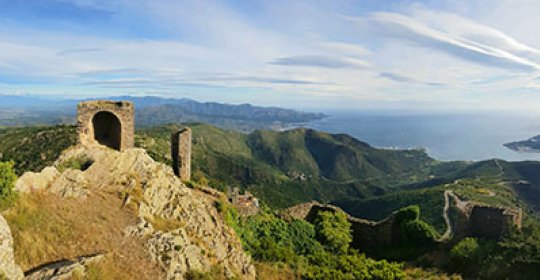
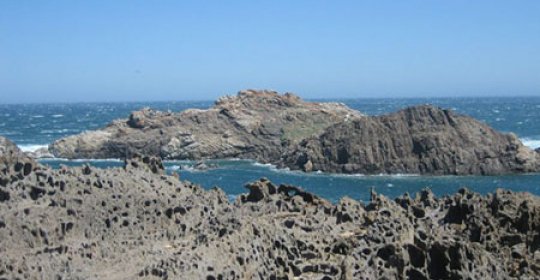
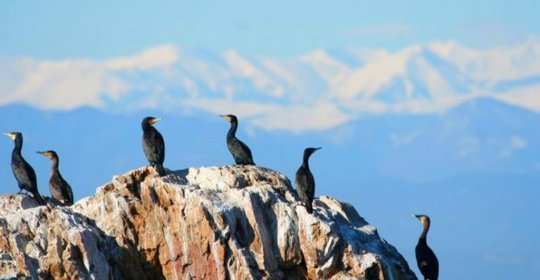
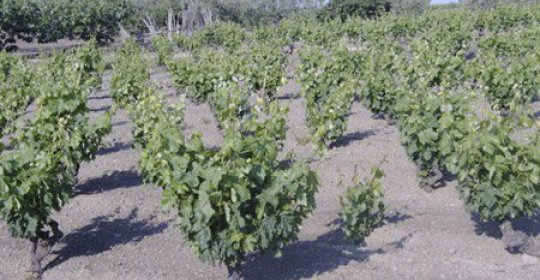
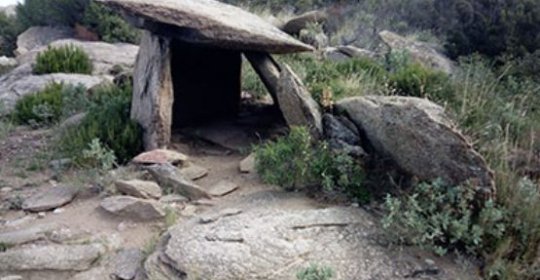
In March 1998, an area of the Costa Brava was officially created that belongs to the sixth category of the International Union for Conservation of Nature. This is the Cap de Creus Natural Park, a protected area with a quite large surface area, reaching almost fourteen thousand hectares in total.
Before the existence of the Cap de Creus Natural Park, there was no other marine-terrestrial park in the Autonomous Community of Catalonia. Specifically, of the entire area covered, 900 hectares are terrestrial nature reserves, while 835 are also organic reserves, but in this case of marine type.
The protected area is framed within eight different municipalities, all belonging to the Costa Brava. Port de la Selva, Cadaqués, Roses, and Llansá are some of the most known at the national level, and should add to the list Pau, Vilajuiga, Palau Sabardera, and Selva de Mar.
Flora
In some natural parks of the Costa Brava, we are used to seeing a type of purely Mediterranean flora. However, in Cap de Creus there is an enormous variety, including central European, eurosiberian, and even Atlantic plant elements.
This is why at the Cap de Creus Natural Park it is possible to see from many shrubs and cork oaks that are very typical of the Mediterranean to other types of flora that are not usually seen: siliceous mountain meadows, hazelnuts, and a long etcetera.
The tramuntana wind that usually blows in this protected area exerts a modeling of each plant species that is present there, hardening the habitat due to various purely organic aspects. The first of these can be summarized as the fact that plants evapotranspire more. On the other hand, their salinity level is higher, being this aspect a result of the aerosols given by the seawater.
Although rock has a huge presence in the Cap de Creus Natural Park, either in the form of rocky areas or even cliffs with beautiful views of the sea, in certain areas there is a beautiful outcrop that forms a visual spectacle full of many colors.
Fauna
The type of fauna that abounds most in this natural park of the Costa Brava is undoubtedly amphibians. Although not all those species found in the Iberian Peninsula are seen in Cap de Creus, a very high percentage makes an appearance in this protected area. Common toads are very common, as is the southern frog, which draws attention due to its small size.
Following the example of the Paratge Natural d’Interès Nacional de l’Albera, the Mediterranean turtle can also be seen in Cap de Creus, although in this case the quantity is much more reduced. Other similar animals are part of the list, highlighting among them the leprous tortoise, the common gecko, and the ocellated lizard.
Another type of fauna that is also very important for the ecosystem of this natural park is the one that flies over. When birds migrate both in the autumn and spring seasons, it is highly recommended to visit the Cap de Creus Natural Park, as many species can be seen.
Just going to any cliff is enough to see several Bonelli's eagles, although they are not the only birds that tend to roam these rocky areas that this fauna likes. The list is added with owls, peregrine falcons, and so forth.
Of course, the marine environment fully affects the fauna, leading to the presence of everything from birds to many fish in the water's depths. Starting with flying animals, seagulls are extremely common in Cap de Creus, while other birds are not so present in the protected area: gannets, terns, shearwaters, and the shag, among many others.
Next, we need to talk about the fauna of the marine bottom. What stands out to those who have the privilege of observing it is the reddish coral, which is shared by the gorgonian scientifically named paramuricea clavata.
There are numerous fish that roam the waters of the Cap de Creus Natural Park, prominently featuring many grouper, bream, and sardines. They coexist harmoniously with lobsters and lobsters.
Rules
Enjoying both the flora and fauna, as well as the itineraries we will describe later, requires complying with a series of rules, which vary depending on whether access is to the terrestrial or marine area.
If you opt for the terrestrial area, you should know that you need a specific authorization to plant any type of plant element, as well as to extract it. On the other hand, no type of waste can be thrown.
Going through the terrestrial area is possible if you do not move with a motor vehicle, although it can be done on the tracks designated for this purpose, as well as on the roads.
Camping is not allowed freely in any of the areas, while in some of them fire is permitted, provided that the stipulated periods for doing so are respected.
Concluding with the rules that reference the terrestrial area of the Cap de Creus Natural Park, it is noteworthy that there is a possibility of hunting, having to strictly apply the relevant regulations.
If you choose to go to one of the integral nature reserves that are part of this protected area, you must circulate according to the itinerary that you intend to follow, so completely free movement is not allowed. At the same time, extracting any plant or animal element is completely prohibited, as well as any fossils, rocks, or mineral sets that are present in the natural park.
Beyond the terrestrial, there are also partial marine nature reserves. In them, the regulations must be applied when practicing fishing, visiting the area, anchoring, diving, or moving through the area via the maritime route.
The marine area that is not a partial nature reserve is also subject to important rules, such as that certain specific fishing methods are prohibited: purse seine and trawling. On the contrary, if it is artisanal or carried out as if it were a sport, fishing can be practiced.
Itineraries
In the Cap de Creus Natural Park, there are several itineraries, so each visitor can choose the one that suits them best. However, all of them are a bit difficult. Unlike other natural parks in the Costa Brava that have very simple routes, being such an abrupt area steep slopes and very narrow passages are common. This is why comfortable and good quality footwear is essential, regardless of whether the itineraries are undertaken by adults or children.
Circular itinerary to the Punta del Cap de Creus
This route is ideal for enjoying the wonderful landscapes that the area offers to hikers. It is a circular itinerary that covers just over one and a half kilometers, with some sections being a bit difficult.
Punta de Cap de Creus, Cova de S’Infern, and S’Eixugador are some of the places visited during the ninety-minute duration, starting the experience at the lighthouse.
To follow the circular itinerary, reddish signs must be followed. The herbaceous plant reed and the reeds are very present, especially at the end of the route.
Cala Culip
Two kilometers are enough to reach an iconic cove in the Costa Brava, which, unlike many others, tends to be little frequented by bathers. This is due to the difficult access, which is only compatible with hiking tours or maritime crossings.
From the Cap de Creus Natural Park, you only need to travel two kilometers, which takes about three-quarters of an hour. The itinerary is not too difficult, ending at a cove that is only fifteen meters long. It is worth noting that nudism is allowed on the beach.
Old path from the lighthouse to Cadaqués
If you want to explore the natural park with family, this route suitable for the little ones is the best possible choice, although it is long due to its considerable distance: eight kilometers in total.
Steep slopes are hardly present in the itinerary. This is why it is quite common to encounter other families.
How to get there
The AP-7 connects with several regional roads that lead to various municipalities of the Costa Brava, one of the most beautiful being the well-known Cadaqués, a lovely fishing village. This town is precisely the one to reach to start the journey to the Cap de Creus Natural Park.
In Cadaqués, there are many signs, so it is not difficult to reach the iconic lighthouse that begins itineraries that provide a unique experience. However, it is not a drive suitable for all types of people, as those who get overly dizzy with curves or are not used to driving on very winding roads may end up having a hard time.
However, if that's not the case, it is a route that is fully enjoyed. In fact, it is one of the best routes to take by private vehicle, as during the journey spectacular views unfold.
Where to park
After reaching the end of the winding road that takes you from Cadaqués to the Cap de Creus lighthouse, you will find a parking area that is quite spacious, as well as free, which is appreciated. However, it is not easy to find an empty space, especially in the middle of the summer season. If you decide to visit this protected area in July or August, it is advisable to go early if you want to park easily right at the lighthouse.
Fees
Following the example of the parking area, the unforgettable experience of touring the Cap de Creus Natural Park is completely free.
