The best rated Museums in Palamós
Museu de la Pesca

Historically, human beings have always been closely related to the sea in general, and the objective of the Fishing Museum is to publicize this existing link, as well as to make visitors aware of a fundamental aspect: the importance that fishing acquires for the sustainability of the entire territory.
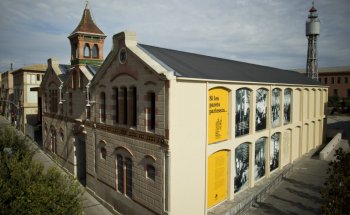
This museum space is located in Palamós, specifically in the port of one of the most charming cities on the Costa Brava. The location chosen is unbeatable to ensure that visitors of all ages discover what natural, cultural and even social heritage is directly associated with fishing.
Route
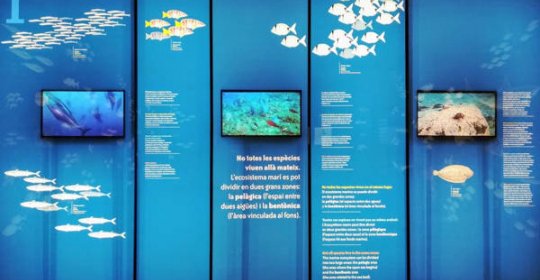
Since 2002, the year in which the Fishing Museum was inaugurated, the same route has always been planned that begins by revealing the unknown of what exactly is fished. It is in this space that the Mediterranean Sea acquires special relevance, as well as the various marine species that are part of it.
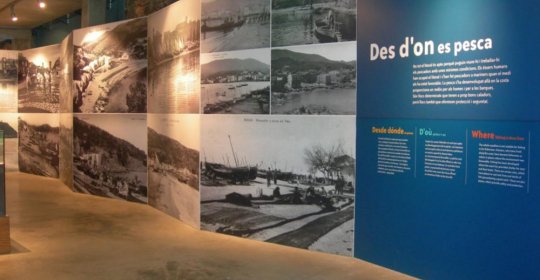
The route then passes through a point designed to find out where the fishing activity takes place. Some activity-packed drainers can be admired in a permanent exhibition that is very well conditioned and illuminated to make the experience rewarding in every way.
The next stop on the museum tour is closely related to the fishermen, who become the protagonists, along with several colleagues from other professions who also acquire special significance: from the vendors who market the fish obtained by these fishermen to the mechanics who fix their vessels so that they can carry out their activity normally in the Mediterranean Sea.
In this part of the tour, visitors find out what the fishermen of yesteryear were like and what they are like today, all of them sharing the same surviving spirit, as well as the courage that has always characterized them, especially when they have to face working days with a sea that is too rough - quite a lot usual on the Costa Brava-.
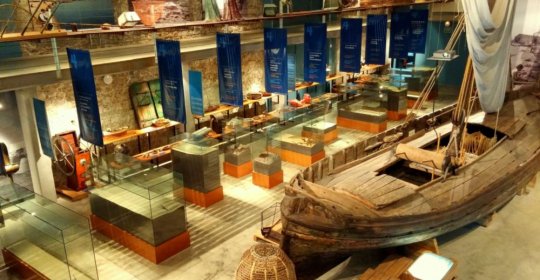
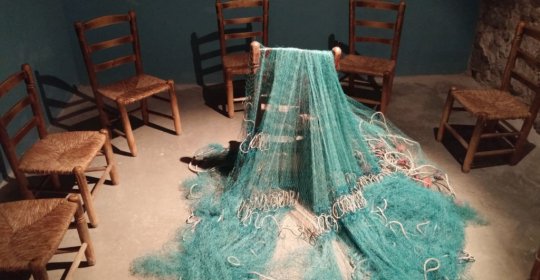
The penultimate phase of the tour that comprises the Museu de la Pesca is dedicated to showing visitors how they fished in previous times, in addition to the methods that are put into practice today. Boats and utensils can be observed, the vast majority of them standing out for being in an enviable state of conservation. It is especially meritorious in the case of fishing boats, since direct contact with the sea and corrosion do not seem to have taken too much of a toll on them.
Finally, the tour ends up trying to make each visitor aware of how important it is to dignify fishing, especially if you want this profession to also have relevance in the future.
Collection
Along the route described above, you can see some pieces from the collection of the Museu de la Pesca that deserve special mention, starting with those two that attract the most attention from visitors. We refer to a couple of boats, known as the Polar Star and Gazelle. They are very different from each other, implying how varied the sector was at the time and continues to be today.
Continuing with regard to boats, in this museum there is also a winch that was used to string them, as well as taking them out of the aquatic environment when the fishing day was over.
Another element that usually attracts a lot of attention of visitors is the plate made of ceramic about four hundred years before the birth of Christ. Specifically, it is a part that is well preserved, including the crustaceans and the various fish that are part of the whole as a decoration.
Of course, in the Museu de la Pesca there is no shortage of tools and utensils in general that fishermen used in the past, some of them being very practical for 21st century fishing. Clear examples are the compass for orientation and the glass floats needed for trawling.
Rates
Individual general admission costs 5 euros. The unemployed and young people up to the age of sixteen have to pay 2.50 euros for admission, while children between the ages of zero and six can access the Fishing Museum free of charge.