The 4 best rated Museums in L'Escala
Ruïnes de Empúries

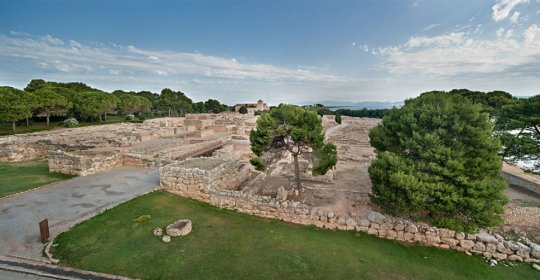
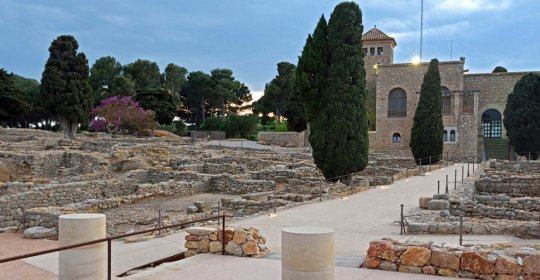
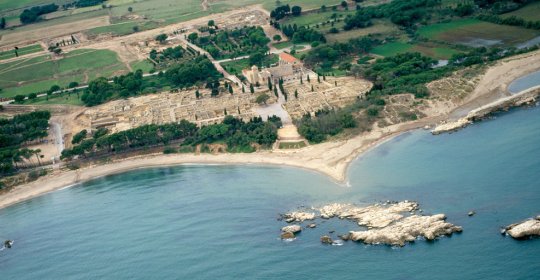
Of all the museums on the Costa Brava, one of the most popular worldwide is undoubtedly the space managed by the Museum of Archaeology of Catalonia. We are referring to the Ruins of Empúries.
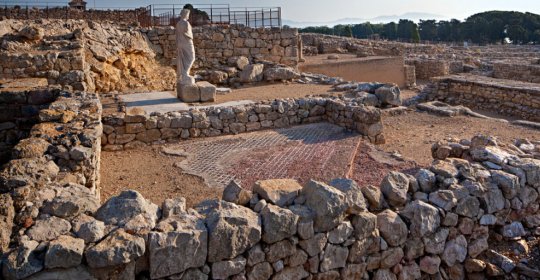
Basically, it is an archaeological site where a series of remains belonging to a couple of cities: one Greek and one Roman can be found.
Both cultures first entered the Iberian Peninsula through Empúries, as evidenced by the ruins that are part of the MAC. Precisely on the entire peninsular territory, only one Greek city is preserved, which is actually the one that is partially preserved in the Ruins of Empúries.
Considering that they are over two thousand years old, it is surprising how well these remains have been preserved. This is largely the result of the good maintenance and restoration work that has been carried out over all this time.
Some of the best-preserved elements are undoubtedly the mosaics, which belonged to various noble houses. Something similar can be said about the Roman forum, which has turned into the main point of interest of all the ruins over the years. Even so, there are other elements that also attract a lot of attention from visitors, such as the Greek statue of Asclepius.
It is worth noting that the museum has managed to adapt to current times. This is demonstrated by the QR codes that, when scanned with a mobile device, provide relevant information about what is being viewed.
The audio guides allow visitors to educate themselves, finding out numerous details related to Greco-Roman history. Of course, there are also professionals from the Ruins of Empúries who are in charge of kindly resolving any doubts visitors may have about this museum space.
On the other hand, covering a hundred percent of the ruins that are part of this outdoor museum site in a single visit is not viable if you are short on time. If you want the experience to be full and rewarding, it is advisable to have a couple or three hours, as otherwise, you will not have time to see everything.
Occasionally, experienced archaeologists can be seen in the facilities preparing and performing maintenance tasks, which surprises visitors, who have the opportunity to admire the important work carried out by these specialists.
Not all the exhibits are outdoors. Some works and sculptures are located in a very well-conditioned indoor space. However, it is undeniable that the main attraction of the Ruins of Empúries are the Greco-Roman vestiges.
These ruins are located in Sant Martí d’Empúries, specifically in a privileged site that offers spectacular sea views. Very few museums can boast of offering visitors such an impressive aquatic skyline.
Permanent Collection
At the Ruins of Empúries, two permanent collections can be distinguished, although one of them evolves over the years. We refer to the ruins themselves, which are periodically excavated in greater proportions, now approaching twenty percent of the total. These tasks have been carried out since 1908, and the progress is constant, consisting of a very precise and respectful scientific recovery.
On the other hand, the Archaeological Museum of Catalonia within the ruins has a well-preserved permanent indoor collection.
Activities
Traveling back in time by viewing the ruins, enjoying the sea views, and marveling at the excellent condition of the elements that make up the permanent collection are not the only activities available. Other popular options include theatrical guided tours.
On the list, you should also add the concerts that take place in the forum. Additionally, workshops, which are ideal for families with children, should not be overlooked.
Prices
The general entrance fee is 6€, reduced to 4€ for seniors, pensioners, students, large families, or single-parent families.
There is the possibility of accessing the Ruins of Empúries for free. Those who can enjoy free entry are those under 16 years of age, unemployed, and disabled individuals.
Anyone can visit the ruins for free on the first Sunday of every month, except for July, August, and September.
Since it is a very successful museum, having become a reference on the Costa Brava, the parking lot tends to be quite full. Luckily, there are two different parking options: one paid and one public with free access, although the latter usually has no available spots. If you want to park for free at the Ruins of Empúries, it’s best to arrive with plenty of time in advance.
Museu de la moto Vicenç Folgado

The Museum of the motorcycle Vicenç Folgado, located at Carrer Closa d'en Llop 9, CP 17130, l'Escala, is a fascinating place offering a wide collection of motorcycles, cars, and other antique items. Visitors highlight the kindness and knowledge of Víctor, the guide, who provides detailed and passionate explanations about each exhibit. The collection includes:
- Classic motorcycles and unique cars
- An impressive handmade train model
- Collector's items that evoke the history of technology
With a very affordable entry fee, it is a must-visit experience for history and mechanics enthusiasts, as well as an excellent place to enjoy with family or friends. Guests praise the attentive service and the immersion in nostalgic memories, making this museum a true gem on the Costa Brava.
Museu de l'Anxova i la Sal
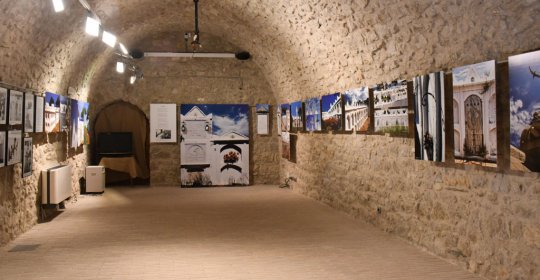
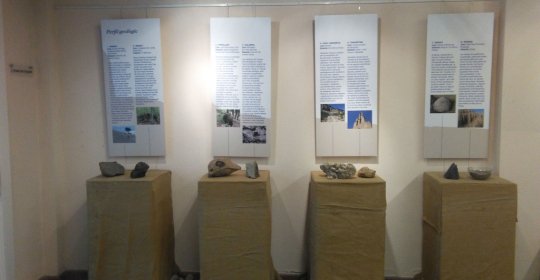
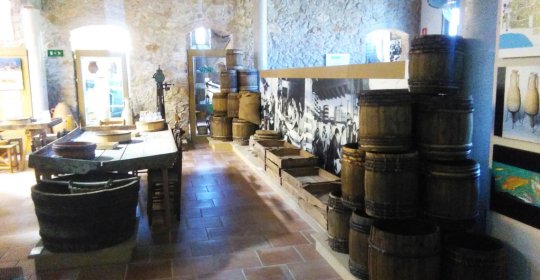
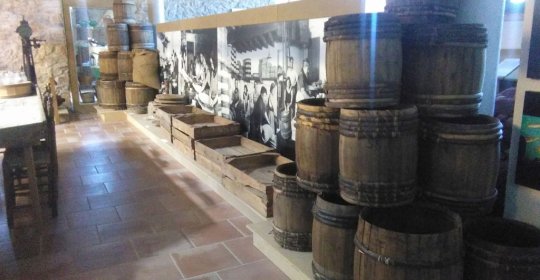
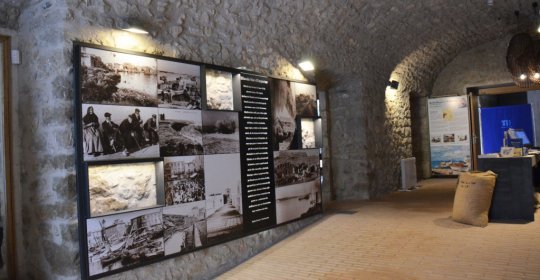
On the Costa Brava there is a population that, among other things, is known throughout the country for its delicious anchovies. Therefore, it is not surprising that in l'Escala there is also a museum dedicated to this food product. Specifically, it is the Museu de l'Anxova i la Sal.
A slaughterhouse of a certain age was the building used to inaugurate this museum space in 2006, which became destined for salting anchovies unique worldwide.
Of course, fishing in general also acquires special importance for the museum, encompassing techniques and other aspects related to this discipline, which is so deeply rooted throughout the coast of Catalonia.
As is to be expected, fishing and salting anchovies have historically always been very relevant on the Costa Brava, so it is not surprising that there are elements even from the 16th century in the Museu de l'Anxova i la Sal.
Precisely the museum is ideal for finding out how both fishing and salting techniques evolved. It is very striking to see the way in which fishermen from several centuries ago obtained both anchovies and sardines, especially when compared in the same museum space with the methods used today.
With reference to the elements typical of previous times, the good condition in which they are preserved is surprising, especially considering that many of them were in constant contact with the sea.
For example, in the Museu de l'Anxova i la Sal there is a boat whose sail has no perforations or excessive discoloration, while the hull and the entire structure in general remain intact. In fact, it could even be used today for sailing.
The same can be said of the various utensils, which are ideal for finding out what fishing and salting were like in previous times. For the journey into the past, several black and white photographs are also shown in the museum, thus paying tribute to the professionals who day after day dedicated themselves to these canning tasks.
At the entrance to the Museu de l'Anxova i la Sal there is a large photo-mural that usually attracts the eyes of visitors. And it's no wonder, since the visual composition shows what is both the cultural and natural heritage of l'Escala, a municipality of enormous importance for the Costa Brava in general.
It is not the only point in the museum where the population itself receives the relevance it deserves. In another space of the facilities there is a model that shows to scale not only the seashore and the boats, but also the houses of fishermen and even several workers performing their professional duties on the sand of the beach.
They are not installations that stand out for their large dimensions, but rather the opposite, which gives rise to a welcoming atmosphere that is enhanced by those who work in the museum.
All professionals are kind to explain details of the exhibitions, thus making any visitor very interested in the history of fishing and salting. In about an hour it is possible to finish the permanent exhibition by visiting several rooms that are well equipped.
After ending this activity, it's time to enjoy audiovisual material that doesn't leave visitors indifferent. It explains how both the population of l'Escala evolved and the production of those considered by many to be the best anchovies in existence.
Rates
Access to the Museu de l'Anxova i la Sal is completely free. In the museum space itself there is an area for the purchase of anchovies, and you can take advantage of the good prices at which some of them are, as well as the souvenirs that tourists in general like so much.