The 4 best rated Museums in Cadaqués
Casa - Museu Salvador Dalí
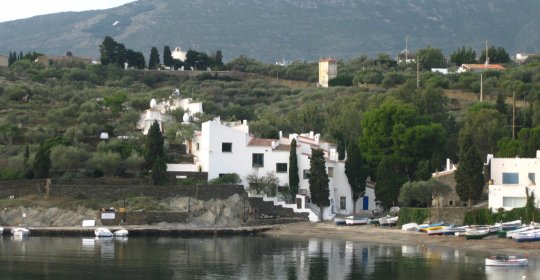
The figure of Salvador Dalí has always been closely related to the Costa Brava. To this day, it remains so, since those who wish to delve into the life of this artist can do so by visiting the house that was his home for more than half a century, which was located in Portlligat.
History of the house
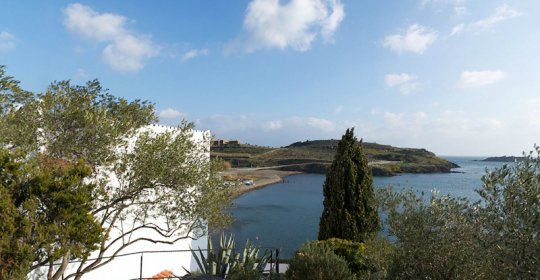
After falling in love with the area, Salvador Dalí did not hesitate to acquire a couple of shacks. After placing his trust in Joaquim Ferrer, a very experienced bricklayer, he gradually shaped a dwelling that stood out mainly for its spectacular sea views.
Years later, both Dalí and his wife Elena Ivánovna, popularly known as Gala, decided to hire Joan Vehí, a prestigious carpenter who took charge of transforming another shack they had just purchased into a kind of library.
Gala passed away in 1982, at which point Dalí decided not to return to his own house. Seven years later, the artistic eminence born in Figueres passed away.
Today it is not a dwelling but rather a museum space shaped by two renowned architects. Currently, the Casa-Museu Salvador Dalí is historically and artistically enjoyed by more than one hundred thousand visitors each year.
What the house-museum is like
The first thing that catches the eye is the labyrinthine aspect of the facilities. A series of hallways that are not very wide lead to several spaces that have no exit, as well as some slopes that can even lead to disorientation.
Each room present in the Casa-Museu Salvador Dalí features openings that vary not only in shape but also in size. This is another demonstration of how much Portlligat enchanted the artist from Figueres, specifically its bay, which was depicted in some of his works and also in his own home.
The house also reflects how much Salvador Dalí liked kitsch trends, in addition to the surrealist style. Both designs can be seen in the three very differentiated spaces that the Casa-Museu has. In the first of them, one can even see intimately how the couple lived in this house.
On the other hand, the studio is another of the spaces that impress visitors the most, as it is possible to see how an artist who marked a before and after worked. Finally, the spaces in the exterior are another area that captures attention.
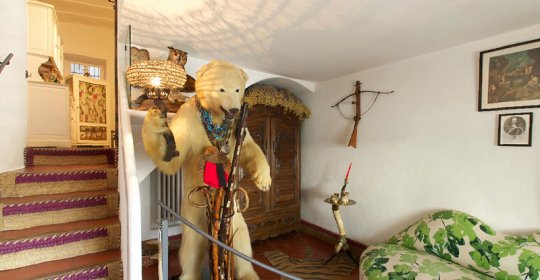
Upon entering the Casa-Museu Salvador Dalí, one enters a room presided over by an element that Edward Frank Willis James gave to Dalí and his wife. It is a bear that was used for various purposes, from keeping umbrellas safe to holding a light point. Near that bear, there is a stuffed bird, specifically an owl, which is a clear example of the couple's passion for the conservation and exhibition of fauna, a discipline known as taxidermy.
After passing through this area, one arrives at the studio. Both the easels and other elements that Salvador Dalí used to unleash his creativity and imagination are still present in this space, with all the utensils being perfectly preserved.
After visiting the studio, it is time to access a room where Nero Claudius Caesar Augustus is represented, specifically with a plaster bust. It was precisely this same artistic element that led him to shape one of his most iconic paintings: Dematerialization of Nero's nose, which was created in 1947.
After enjoying a visit to the studio, one can see a dressing table used by Dalí's wife, as well as a kind of dressing room filled with numerous cabinets. It is not clothes that are present inside these pieces of furniture, but photographs of Gala and Salvador in which they are seen alongside several world-famous celebrities.
Crossing the mentioned space leads to a room called the Oval Room. It was frequented especially by Salvador Dalí's wife, who used it to enjoy one of her main hobbies: reading. In this place, she also hosted various visitors and acquaintances in general.
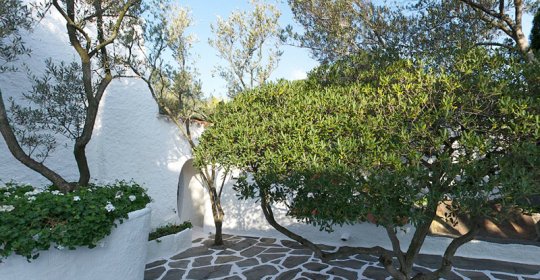
If the Casa-Museu Salvador Dalí captures much attention inside, the exterior doesn't fall behind. Indeed, we are faced with an area that is also well cared for, perfectly demonstrated by the courtyard. Again, access to this space requires passing through a labyrinthine area where there is a dining room that the couple used to have something to eat and drink during the summer season.
In some outdoor spaces, there are ornamental elements of great historical and artistic value. The best possible example is that of the figure Ilisos, created by the sculptor Phidias. The reproduction that Salvador Dalí had and that is still present in the courtyard of his house remains in excellent condition, and the same can be said for the large planters whose shape recreates the appearance of a cup.
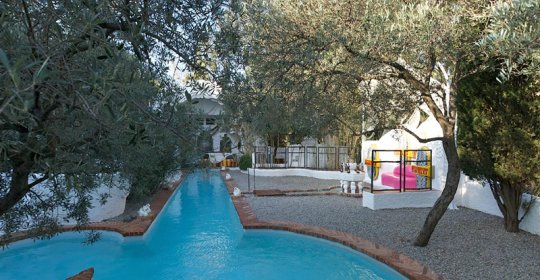
Finally, at the Casa-Museu Salvador Dalí, one can also observe the swimming pool that was built in 1967. It is undoubtedly the point of the house that arouses the greatest admiration. And it's no wonder, as it has many decorative elements that are truly beautiful and original. For instance, in the house's pool, there are a couple of swans from which water flows, as well as a sofa shaped like lips.
Rates
Visiting this museum space in Portlligat costs €18 per individual entry, while if it is reduced, the cost is €11, and it's essential to book in advance to access the Casa-Museu Salvador Dalí.
Expo Dalí
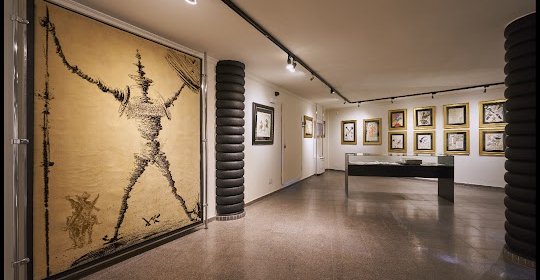
Expo Dalí, located in the charming Costa Brava at Carrer de Santa Margarida 24, CP 17488, is a must-visit cultural destination for art enthusiasts. This exhibition features a wide collection of works by Salvador Dalí, including paintings, sculptures, and lithographs, showcasing a unique perspective on the surrealist genius.
Visitors highlight the quality and variety of the artworks, as well as a welcoming atmosphere with no reservation required. Some of the most appreciated features include:
- An affordable entry fee (10 euros).
- Exhibits spread over three floors, allowing for an in-depth exploration of his artistic journey.
- The option to bring pets, adding a special touch to the visit.
- A friendly and attentive staff providing explanations in multiple languages.
- A unique collection that includes lesser-known works, alongside illustrations for literary works.
With comments like 'fantastic collection' and 'highly recommended', Expo Dalí is undoubtedly a cultural experience worth experiencing.
Museu de Cadaqués
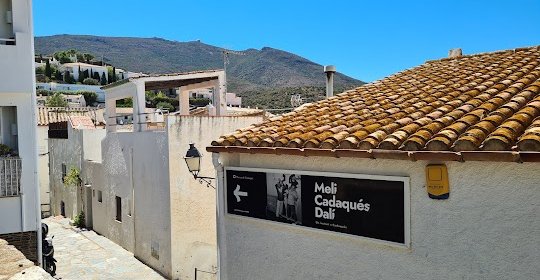
The Museu de Cadaqués, located in the beautiful Costa Brava at Carrer d'en Narcís Monturiol 15, CP 17488, offers a unique experience that combines history, art, and culture. This institution, in collaboration with the Fundació Joan Vehí, is noted for:
- Photographic Exhibitions: Showcasing a rich collection of photographs about Salvador Dalí and the cultural history of the town.
- Customer Service: Visitors praise the friendliness and professionalism of the staff, who provide personalized attention and are eager to share their passion for art.
- Welcoming Atmosphere: The museum offers a pleasant and well-organized space, allowing visitors to enjoy the exhibition in a warm and friendly environment.
- Accessibility: Located just a short walk from the beach, it allows visitors to explore the charming town of Cadaqués before or after their visit.
Visiting the Museu de Cadaqués is an experience you should not miss!