The 19 best rated Museums in Baix Empordà
El Gran Museo de la Magia

The Grand Museum of Magic, located on the Costa Brava, is a must-visit for magic and history enthusiasts. With an impressive collection of magical artifacts and 19th-century automatons, this museum offers a unique and magical experience led by its founder, the great magician Xevi.
During the visit, attendees enjoy:
- In-depth and engaging explanations about the displayed items.
- A tour of approximately two hours that keeps everyone entertained.
- A magic show at the end of the visit that leaves all visitors amazed.
- A warm and welcoming atmosphere provided by Xevi and his daughter, who share fascinating stories of their journeys and experiences in the world of magic.
Visitor feedback highlights the kindness of the staff and the incredible collection of items, making this museum a recommended place for all ages. So don’t hesitate, visit!
Ciutat ibèrica d'Ullastret

The Ciutat ibèrica d'Ullastret is an impressive site that offers visitors a unique experience to explore Iberian history. Located on the Costa Brava, this magnificent archaeological city stands out for its well-preserved ruins and its access to a fascinating museum that houses numerous relics from the era.
Visits are enriched by a detailed audioguide, which captures the attention of visitors with clear and entertaining explanations. Some highlighted aspects of this experience include:
- Free and accessible parking.
- Opportunities for guided tours and interactive explorations.
- Beautiful and tranquil natural surroundings.
- Audioguide tailored for children, making the visit family-friendly and educational.
- A museum with interesting exhibits and immersive audiovisual content.
Visitors highlight the friendliness of the staff and the quality of the museum, as well as the incredible preservation of the ruins. The Ciutat ibèrica d'Ullastret is considered a must-visit destination for those wishing to connect with the rich past of the peninsula and is highly recommended for all ages.
Museu D'Arqueologia de Catalunya. Ullastret

The Museum of Archaeology of Catalonia, located in Ullastret, is a magical place that is definitely worth visiting. With a rich history and charming atmosphere, the museum offers a unique experience for both adults and children. Here, you can discover archaeological pieces of great interest that are well-preserved and displayed.
Among the standout aspects of your visit are:
- Very friendly and attentive staff providing detailed information.
- Interactive exhibits, including a fascinating recreative video that transports viewers back to the Iberian era.
- Availability of audioguides in multiple languages to enhance the educational experience.
- Free and accessible parking.
- A pleasant surprise for those interested in history and archaeology, highly recommended at 100%.
The experience is complemented by an outdoor environment rich in vegetation, ideal for enjoying a day with family. Come and discover the fascinating history of our ancestors in a museum that you should not miss.
Museo de Historia del Juguete

The Museum of Toy History, located at La Rbla. 50, CP 17220, San Feliu de Guíxols, is a charming place that instantly transports you back to childhood. Despite its size, the collection is exceptionally well-maintained and organized, featuring toys from 1880 to 1980. Customer service is commendable; the staff is very friendly and provides a guided introduction that helps visitors better understand the exhibit. The experience is perfect for the whole family, allowing for nostalgic memories and an enjoyable educational tour.
The museum also boasts a beautiful modernist building that is a draw in itself. It includes a scare tunnel that adds a fun twist to the visit. Although there is an admission fee, the value for money is excellent given the variety of toys on display. Highly recommended for anyone seeking an entertaining and heartwarming experience.
El Tinglado
El Tinglado is a charming restaurant located on the beautiful Costa Brava, in the port of Sant Feliu de Guíxols. This unique place combines historical décor with a cozy atmosphere, highlighted by its impressive steam locomotive and carriage that adorn the interior of the establishment.
Visitors praise their daily menu, which offers excellent value for money, with well-crafted and quality dishes. The weekend menu is also highly regarded, featuring paella and other seafood dishes. Additionally, diners have noted the friendliness and professionalism of their staff, who provide exceptional and attentive service.
Among their culinary offerings, you can find balanced and varied options that are perfect for enjoying in a pleasant environment, whether on the terrace or inside the restaurant, always with great views of the port. It is a recommended place to visit with family and friends, ideal for celebrating special moments, such as weddings, with many customers expressing their gratitude for the wonderful experiences had here.
Museu de la Pesca
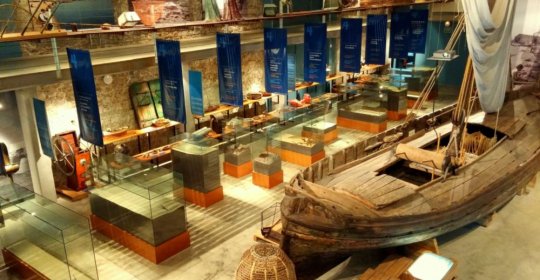
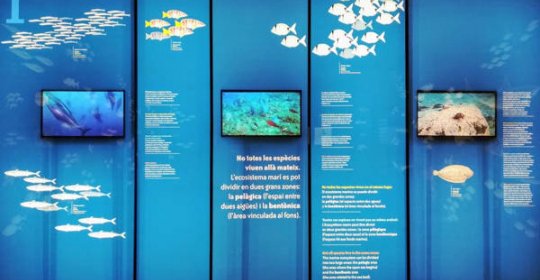
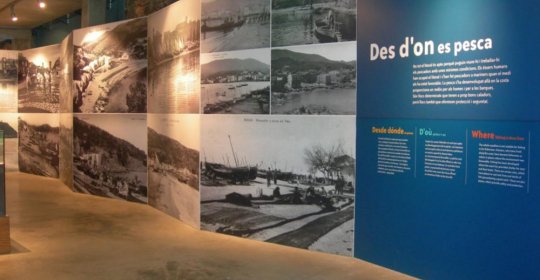
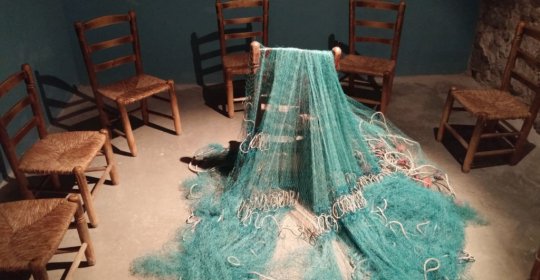

Historically, human beings have always been closely related to the sea in general, and the objective of the Fishing Museum is to publicize this existing link, as well as to make visitors aware of a fundamental aspect: the importance that fishing acquires for the sustainability of the entire territory.
This museum space is located in Palamós, specifically in the port of one of the most charming cities on the Costa Brava. The location chosen is unbeatable to ensure that visitors of all ages discover what natural, cultural and even social heritage is directly associated with fishing.
Route
Since 2002, the year in which the Fishing Museum was inaugurated, the same route has always been planned that begins by revealing the unknown of what exactly is fished. It is in this space that the Mediterranean Sea acquires special relevance, as well as the various marine species that are part of it.
The route then passes through a point designed to find out where the fishing activity takes place. Some activity-packed drainers can be admired in a permanent exhibition that is very well conditioned and illuminated to make the experience rewarding in every way.
The next stop on the museum tour is closely related to the fishermen, who become the protagonists, along with several colleagues from other professions who also acquire special significance: from the vendors who market the fish obtained by these fishermen to the mechanics who fix their vessels so that they can carry out their activity normally in the Mediterranean Sea.
In this part of the tour, visitors find out what the fishermen of yesteryear were like and what they are like today, all of them sharing the same surviving spirit, as well as the courage that has always characterized them, especially when they have to face working days with a sea that is too rough - quite a lot usual on the Costa Brava-.
The penultimate phase of the tour that comprises the Museu de la Pesca is dedicated to showing visitors how they fished in previous times, in addition to the methods that are put into practice today. Boats and utensils can be observed, the vast majority of them standing out for being in an enviable state of conservation. It is especially meritorious in the case of fishing boats, since direct contact with the sea and corrosion do not seem to have taken too much of a toll on them.
Finally, the tour ends up trying to make each visitor aware of how important it is to dignify fishing, especially if you want this profession to also have relevance in the future.
Collection
Along the route described above, you can see some pieces from the collection of the Museu de la Pesca that deserve special mention, starting with those two that attract the most attention from visitors. We refer to a couple of boats, known as the Polar Star and Gazelle. They are very different from each other, implying how varied the sector was at the time and continues to be today.
Continuing with regard to boats, in this museum there is also a winch that was used to string them, as well as taking them out of the aquatic environment when the fishing day was over.
Another element that usually attracts a lot of attention of visitors is the plate made of ceramic about four hundred years before the birth of Christ. Specifically, it is a part that is well preserved, including the crustaceans and the various fish that are part of the whole as a decoration.
Of course, in the Museu de la Pesca there is no shortage of tools and utensils in general that fishermen used in the past, some of them being very practical for 21st century fishing. Clear examples are the compass for orientation and the glass floats needed for trawling.
Rates
Individual general admission costs 5 euros. The unemployed and young people up to the age of sixteen have to pay 2.50 euros for admission, while children between the ages of zero and six can access the Fishing Museum free of charge.
Museu del Suro

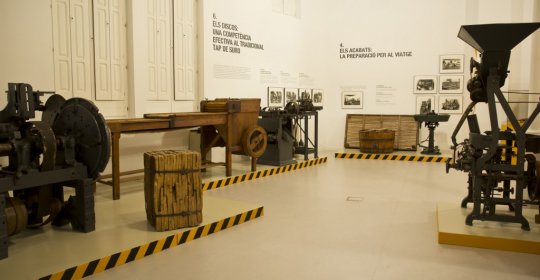
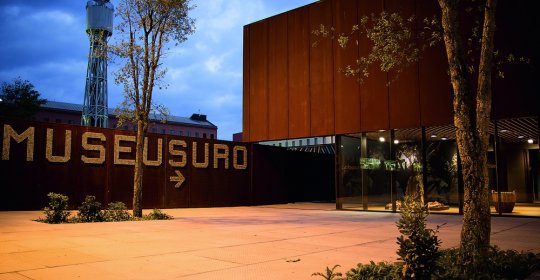
Historically, cork has been of great importance not only for the Costa Brava, but also for the whole of Catalonia in general. So much so that in Palafrugell, in 1972, it was decided to open a museum dedicated to this type of plant tissue. We refer to the Suro Museum.
The facilities chosen to shape this cultural institution were those of Can Mario. It is a factory that used to work with cork, which today accommodates not only this museum space, but also another one. Focusing on the Museu del Suro, it encompasses several different buildings: Cal Ganxó, industrial warehouses and a structure that was recently built.
It is enough to take a look at the outside of this museum to realize how different this recent work is compared to the others, which do have a certain age.
Continuing with the exterior, what attracts the most attention is undoubtedly the main façade. In 1907, the architect General Guitart was in charge of decorating it, putting into practice his knowledge of modernism that led him to shape a unique piece that today is still quite well preserved.
Collection
Speaking of the state of conservation, the state of conservation of all the elements that make up the collection of the Museu del Suro is certainly very good. For example, the barrin machine does not show the slightest sign of oxidation.
Through the collection of this museum you can find out how cork evolved throughout Spain, serving not only for bottling. At the time, it was also used to give shape to some literary works. In fact, today the one considered to be the first book made of cork is perfectly preserved: Don Quixote.
The list of items that are part of the large collection of this museum does not end here. To those already mentioned, we must add other very interesting ones such as the emery machine and a bicycle wheel made of cork.
Salas
Two of the warehouses of the Museu del Suro are intended to be visited by those with an interest in the exciting world of cork, encompassing several rooms that are quite different from each other.
The first of these is that of the permanent exhibition. It is the largest of all, comprising a total that far exceeds one thousand square meters. It is for this reason that those responsible for the museum space were forced to distribute it along two floors of the building.
On the other hand, the room called Manufacturas is much smaller, since it covers just under two hundred and fifty square meters. In this case, you have to go to the ground floor to see the various elements shown in this temporary exhibition.
Among those two ships that we have mentioned before is the Geminus Space, whose capacity includes a maximum that narrowly exceeds thirty visitors. All of them can participate in very pleasant workshops that both adults and young children tend to like a lot, as evidenced by the good opinions that are published on the Internet.
As if that weren't enough, the Museu del Suro offers visitors an auditorium. Just over a hundred visitors can enjoy several screenings of audiovisual material without having to stand, since the room is equipped with chairs, which is to be appreciated. This space is known as Miquel, Vincke & Meyer.
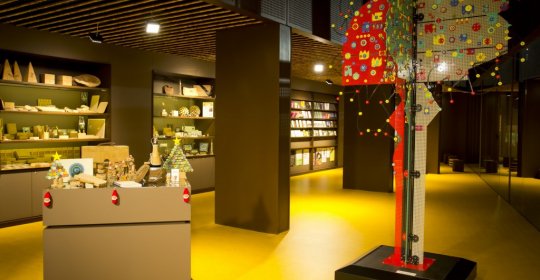
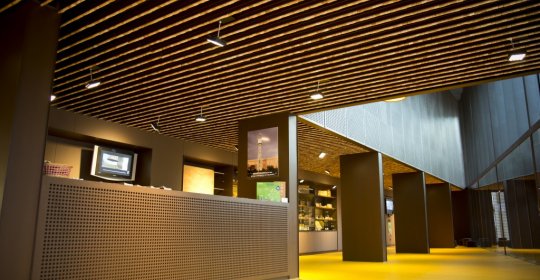
Finally, the module intended for reception is another important room of the Museu del Suro. A quick look at it shows how new this construction is, which was completed in 2011. Visitors are warmly welcomed in this space, which also operates as a store. Therefore, those who wish to do so can end the visit to the museum with the odd souvenir.
Rates
The individual ticket costs 3€, while for the reduced ticket you have to pay 1.5€, and retirees and students can take advantage of this discount.
On the other hand, children under twelve years of age and disabled persons, as well as the unemployed, have free access to the museum. Entering the Museu del Suro at zero cost is also possible for other visitors on the last Saturday of each month.
Terracotta Museu de Ceràmica


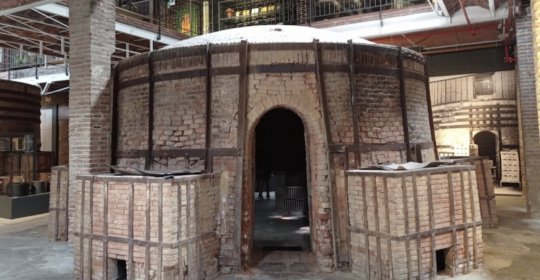
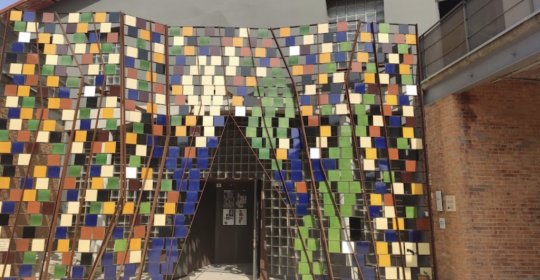
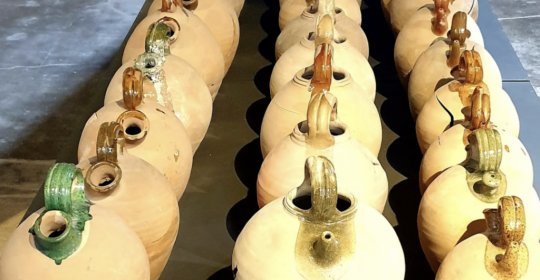
If you enjoy pottery, as well as industrial ceramics in general, there is a museum on the Costa Brava that you cannot miss: Terracotta Museum of Ceramics, located in La Bisbal d’Empordà.
The building where this museum space is located began construction in 1922, completing the structure six years later. However, it was not until 1991 that the museum was inaugurated, which came to encompass a huge area of around six thousand square meters.
Specifically, the building was a factory where all kinds of ceramic coatings were produced. It was named Terracotta, so it's no surprise that this facility is known as the Terracotta Museum of Ceramics.
The Terracotta factory decided to end the professional work carried out there in the mid-eighties. Years later, the town hall of La Bisbal d’Empordà decided to acquire the building, which was then renovated with the clear intention of opening a museum.
Historically, pottery has always been very significant in this locality of the Costa Brava. The history of the potter’s craft, which became popular in La Bisbal d’Empordà in the 16th century, is reviewed in a museum that leaves no visitor indifferent.
All visitors are surprised to see the temporary exhibitions that began just when the museum was founded, the same happening with the permanent exhibition that opened in 1998. The combination of both exhibitions has led to it being ranked among the best Spanish museums dedicated entirely to ceramics today.
Exhibition
When visiting the Terracotta Museum of Ceramics, it is possible to see the kilns that were once used to shape the products that were later marketed. The chimneys that efficiently evacuated the smoke generated during the manufacturing process are also visible.
The exhibition of this museum is divided into four very distinct parts, with the first part focusing on ceramics in general. Throughout this part, visitors internalize the numerous decorative uses ceramics achieved, as well as the great relevance it acquired at the time in the artistic field.
Next, the exhibition focuses on the ceramics from a specific period: the pre-industrial, delving particularly into what took place in La Bisbal d’Empordà. It was made using wheels, while wood-fired kilns were used only once to fire the ceramic elements.
In this part of the exhibition at the Terracotta Museum of Ceramics, the various finishes that were characteristic of this municipality of the Costa Brava are described in detail, which are still present today in the ceramic products shaped in this town: glazed, smoked, and rustic.
The next part of the museum’s exhibition relates to industrial ceramics. Visitors are amazed at how much the potter's profession evolved thanks to the machines that were introduced, which saved a lot of time and allowed for excellent quality results.
Finally, now that we have talked about the professionals who dedicated themselves to pottery, it is time to address the last part of the exhibition, which is specifically dedicated to the creators. Artistic ceramics gained special relevance in La Bisbal d’Empordà at the beginning of the 20th century, which is perfectly reflected in this museum.
Spaces
The Terracotta Museum of Ceramics consists of several spaces, with the most important being the room dedicated to hosting temporary exhibitions, which are renewed every four months. In general, the ceramicists featured in this room tend to be quite popular nationally, being professionals with extensive experience.
'La Peixera' is another of the spaces that are part of the museum, focusing primarily on contemporary ceramics. For its part, 'Actualitat' lives up to its name by showcasing to visitors the most recent works, which perfectly reflect the modern techniques employed by the best ceramic professionals working in La Bisbal d’Empordà.
Lastly, 'El Forn' is a very notable space not only for the presence of four kilns that were once used to create ceramic works. Additionally, it also displays some pieces that are part of valuable collections, both public and privately owned.
Rates
The individual entry to the Terracotta Museum of Ceramics costs €5. The price of the reduced ticket is €2.5, so if you are part of a small group, are a senior citizen, or a student, you will pay less to enjoy the cultural experience.
Children under ten years of age enter the museum for free if the visit is not guided, as well as disabled individuals and citizens residing in La Bisbal d’Empordà.
Museu de la Mediterrània
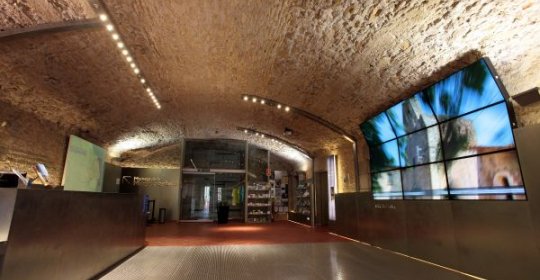
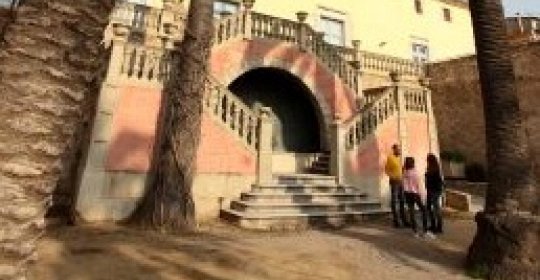
Can Quintana was the building chosen to house the Mediterranean Museum. At the time, specifically when the 16th century began, it was a manor house that was located in Torroella de Montgrí, a municipality belonging to the Costa Brava. Many years later, in 2003, it was decided to open a museum space there that seeks to disseminate everything related to the Mediterranean in general.
The first thing that stands out about the Museu de la Mediterrània is how interactive it becomes. This is precisely why it is common to see young children in these facilities. In fact, many schools both on the Costa Brava and in other areas of Catalonia organize excursions that include a visit to this museum.
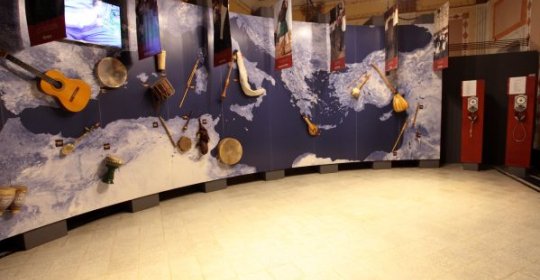
Both children and adults who visit it are soaked in a lot of information that is conducted with a musical thread, which accompanies perfectly throughout the experience. The same can be said for sounds that are also being played.
Of the various installations that are part of the Network of Museums of the Costa Brava, the Mediterranean Museum is one of the most successful. This is not surprising considering the high quality of its exhibitions.
Temporary Exhibitions
This museum offers visitors a total of three temporary exhibitions that offer cultural experiences that are very different from each other. The first one is called Espacio Montgrí. In the room dedicated to this exhibition, it is common to see all kinds of works of contemporary art.
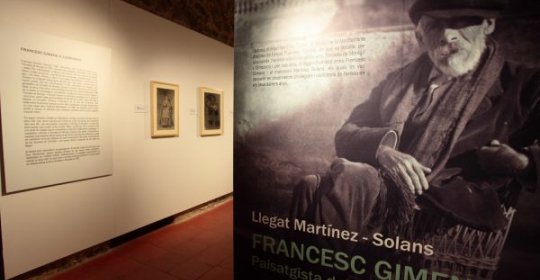
Then it's time to talk about another temporary exhibition that attracts a lot of attention to those who visit the Museu de la Mediterrània. This is the Medes Space, which would have been unfeasible without the generous contribution of Martínez-Solans.
Specifically, a multitude of paintings were donated, which today are part of the Medes Space. All of them were created by a painter who, at the time, was an icon of Torroella de Montgrí. And it's no wonder, since Francesc Gimeno, despite being born in Tortosa, lived in this city on the Costa Brava for a few years.
Finally, the temporary exhibition known as Espacio Baix Ter houses everything that, in one way or another, is related to the Mediterranean area. The pieces on display are not only paintings such as those of Joan Fuster, but also architectural elements such as those shaped at the time by Rafael Masó, who was one of the main drivers of Noucentisme.
Collection
The Museu de la Mediterrània has an extensive collection of which many notable elements are part. One of them is called flabiol, being an instrument that was formerly commonly used by Catalan musicians. To the list of instruments with many years behind them, we must add the one known as lyre, having in this museum the Cretan type.
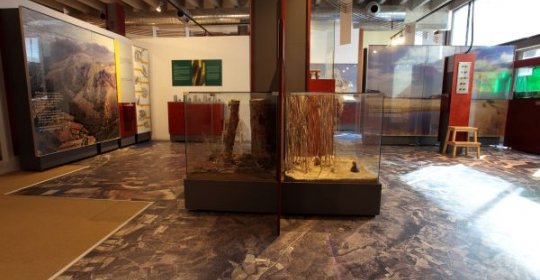
The collection of this museum space also houses some pieces of Roman ceramics with a characteristic shade that is reddish and bright in equal parts. The good condition in which they are found is surprising, especially considering that they belong to the time of the first Roman emperor: Augustus. That is, they accumulate more than two thousand years old.
Since the museum belongs to Torroella de Montgrí, it is not surprising that some of the most notable elements of its collection have been obtained in the Montgrí massif. A clear example is the Peak from prehistoric times. Another example is that of the capital that was extracted from the castle, an architectural piece that is also quite well preserved.
Rates
Accessing this museum space, enjoying the temporary exhibitions and admiring its extensive collection is free regardless of the age of the visitors.
Museo Can Mario

The Can Mario Museum, located on the Costa Brava at Plaça de Can Màrio 7, CP 17200, is dedicated to contemporary sculpture and has surprised many visitors. This museum, part of the Fundació Vila Casas, houses a magnificent collection of works by prominent Catalan artists.
Visitors have highlighted the quality and variety of the exhibitions, both permanent and temporary, making it an essential experience for art lovers. Among the temporary exhibitions, impressive collaborations have been mentioned involving figures like Miró, Gaudí, and Gomis, adding a unique value to the visit.
Moreover, the tranquil atmosphere of the museum allows for a leisurely enjoyment of the artworks, and its accessibility in terms of ticket prices and visiting hours has been appreciated by many patrons. This place is not only a cultural reference in Palafrugell, but it is also considered by some to be one of the best museums in the province of Girona.
With guided tours and exhibitions that stimulate the senses, the Can Mario Museum stands out as a place of discovery, where every visit results in new surprises.
Espai Carmen Thyssen

Located in the beautiful Costa Brava, the Espai Carmen Thyssen, housed in the ancient monastery of Sant Feliu de Guíxols, is an exceptional place to enjoy culture and art. It offers a unique environment that merges the history of the monastery with an impressive collection of works from renowned artists, including Sorolla and Picasso.
With temporary exhibitions that always generate excitement, visitors highlight:
- A luxurious space to enjoy art.
- A magical place that invites reflection and creativity.
- Friendly and helpful staff at every visit.
- A well-maintained atmosphere that respects the history of the location.
- Interesting exhibitions in an emblematic building that enrich the visitor's experience.
The Espai Carmen Thyssen is undoubtedly a must-visit for those looking to immerse themselves in art in a privileged setting.