Places to stay in Baix Empordà
Museu de la Mediterrània
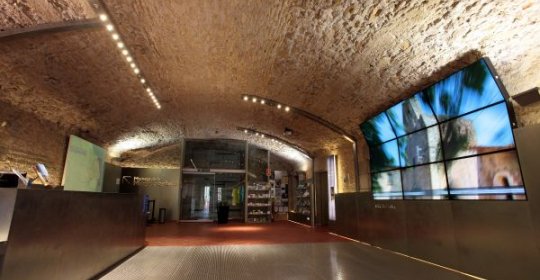
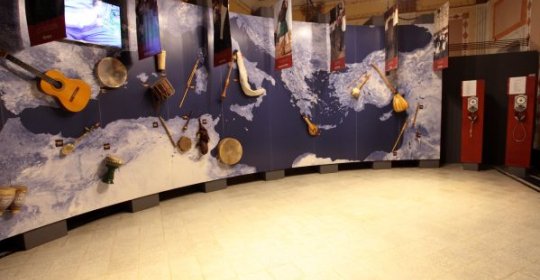
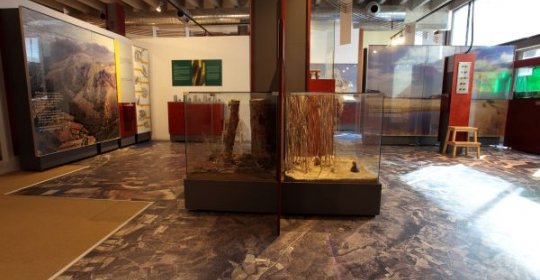
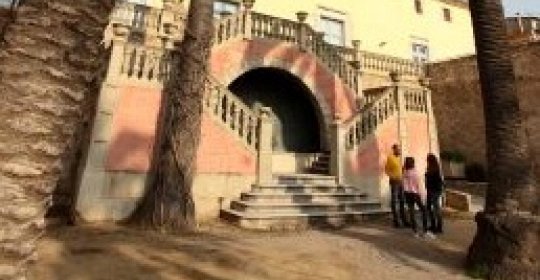
Can Quintana was the building chosen to house the Mediterranean Museum. At the time, specifically when the 16th century began, it was a manor house that was located in Torroella de Montgrí, a municipality belonging to the Costa Brava. Many years later, in 2003, it was decided to open a museum space there that seeks to disseminate everything related to the Mediterranean in general.
The first thing that stands out about the Museu de la Mediterrània is how interactive it becomes. This is precisely why it is common to see young children in these facilities. In fact, many schools both on the Costa Brava and in other areas of Catalonia organize excursions that include a visit to this museum.
Both children and adults who visit it are soaked in a lot of information that is conducted with a musical thread, which accompanies perfectly throughout the experience. The same can be said for sounds that are also being played.
Of the various installations that are part of the Network of Museums of the Costa Brava, the Mediterranean Museum is one of the most successful. This is not surprising considering the high quality of its exhibitions.
Temporary Exhibitions
This museum offers visitors a total of three temporary exhibitions that offer cultural experiences that are very different from each other. The first one is called Espacio Montgrí. In the room dedicated to this exhibition, it is common to see all kinds of works of contemporary art.
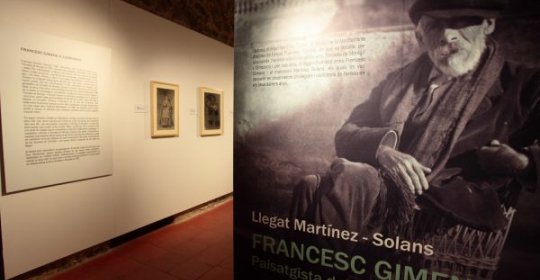
Then it's time to talk about another temporary exhibition that attracts a lot of attention to those who visit the Museu de la Mediterrània. This is the Medes Space, which would have been unfeasible without the generous contribution of Martínez-Solans.
Specifically, a multitude of paintings were donated, which today are part of the Medes Space. All of them were created by a painter who, at the time, was an icon of Torroella de Montgrí. And it's no wonder, since Francesc Gimeno, despite being born in Tortosa, lived in this city on the Costa Brava for a few years.
Finally, the temporary exhibition known as Espacio Baix Ter houses everything that, in one way or another, is related to the Mediterranean area. The pieces on display are not only paintings such as those of Joan Fuster, but also architectural elements such as those shaped at the time by Rafael Masó, who was one of the main drivers of Noucentisme.
Collection
The Museu de la Mediterrània has an extensive collection of which many notable elements are part. One of them is called flabiol, being an instrument that was formerly commonly used by Catalan musicians. To the list of instruments with many years behind them, we must add the one known as lyre, having in this museum the Cretan type.
The collection of this museum space also houses some pieces of Roman ceramics with a characteristic shade that is reddish and bright in equal parts. The good condition in which they are found is surprising, especially considering that they belong to the time of the first Roman emperor: Augustus. That is, they accumulate more than two thousand years old.
Since the museum belongs to Torroella de Montgrí, it is not surprising that some of the most notable elements of its collection have been obtained in the Montgrí massif. A clear example is the Peak from prehistoric times. Another example is that of the capital that was extracted from the castle, an architectural piece that is also quite well preserved.
Rates
Accessing this museum space, enjoying the temporary exhibitions and admiring its extensive collection is free regardless of the age of the visitors.
Museu de la Confitura
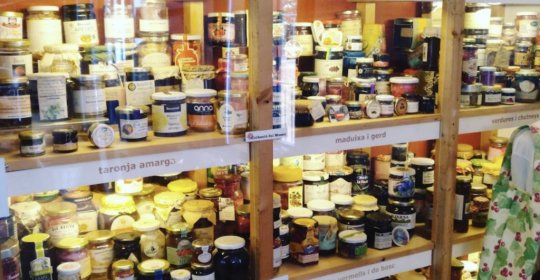
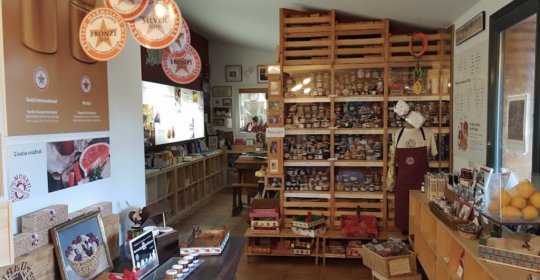
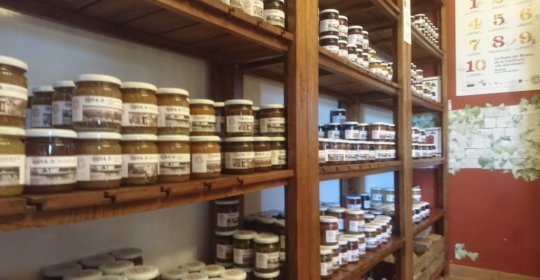
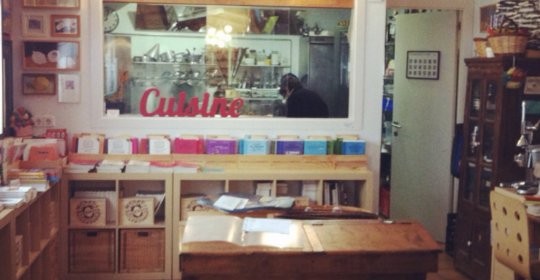
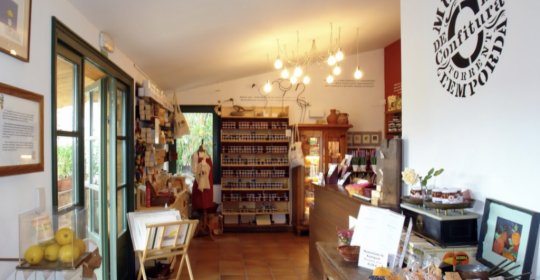
If you like jams or they attract your attention, there is a museum on the Costa Brava that you can't miss. We refer to the Museu de la Confitura, which opened its doors in 2004.
The person in charge of its foundation was Georgina Regàs, a chef who has always been closely linked not only to the exciting world of jam, but also to the Catalan gastronomy sector in general.
After experimenting with the lemons provided by a lemon tree near a house located in Torrent, making everything from refreshing juices to sweet pastries, after a while it was time to shape his first jam. It was then that she was captivated by jam and decided to share her passion with many more people, opening a museum space for this purpose.
Soon the artisan workshop began to receive visitors, which flooded the network with very positive opinions. And it's no wonder, since everyone is treated exquisitely there. We are not only referring to those who want to learn about jam, but also to those who prefer directly to buy the products they want: from jams to jams and even jellies.
The list of flavors available is vast, far exceeding one hundred in total. This demonstrates the enormous experience they accumulate in the workshop, which has resulted in them being able to shape a museum space of great interest.
Beyond the production work, which on certain occasions can be observed to see exactly how jams are made, several exhibitions are also organized in this museum in Torrent. They show, among other elements, the odd jam from its own collection that includes products from a multitude of different countries.
Asif that weren't enough, the Museu de la Confitura also hosts various courses that are aimed at adults, as well as children's workshops. Specifically, the children who enjoy them are those between the ages of six and twelve.
To all this we must add a space within the facilities that also tends to surprise visitors. This is the library, which is full of works that, in one way or another, are related to the confectionery sector.
Precisely by soaking up all the information available in these books, the professionals of the artisan workshop have been able to make some jams that cannot be seen anywhere else in the world. All of them stand out for being not only handmade and natural. At the same time, it cannot be overlooked how original they are.
Of course, all the jams in the museum and in the store in general show outstanding quality. It is for this reason that they have received several very important international awards.
Whatever the tastes of consumers, they have no difficulty finding a jam that satisfies them one hundred percent. Do you prefer those that are made with exotic fruit pieces? Do you want a jam that's sweet but doesn't have sugar? The ideal product is at your disposal in a space that, beyond being a museum, also opens its doors as a store.
Asking the workers of the Museu de la Confitura about any aspect related to jams shows both the kindness and the great knowledge they treasure. Regardless of any doubts you may have, all of them will be resolved, knowing exactly what products are used for their preparation, the properties of these ingredients, and so on.
The exhibition is small and you don't need much time to go through it. In a few minutes you will have obtained several ideas to prepare your own recipes by seeing samples with a great age behind them, as well as a multitude of photographs.
Rates
Access to the Museu de la Confitura is free, but you do have to pay if you want to get one of the many jams that can be purchased right there, making them ideal to give to someone or take as a souvenir.
Parc Natural del Montgrí, les Illes Medes i el Baix Ter
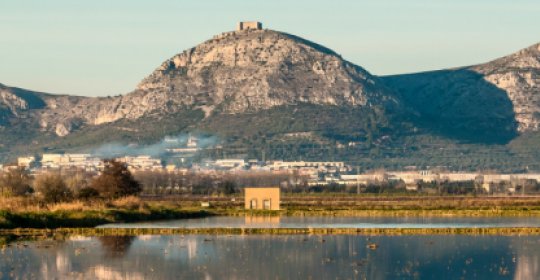
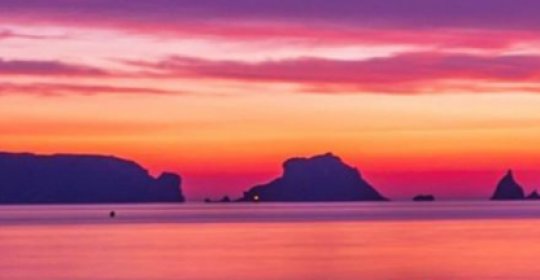
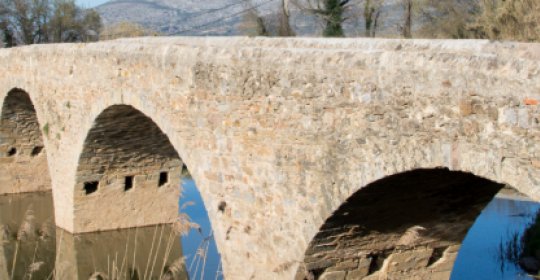
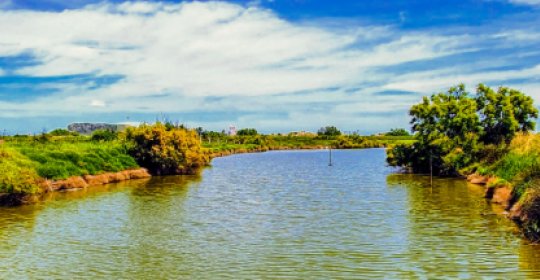
The Costa Brava has several protected areas of managed resources, with one of the natural spaces located between two regions: Baix Empordà and Alt Empordà. This is the Montgrí Natural Park, the Medes Islands and the Baix Ter.
In 2010, this area was officially declared a natural park, which has considerable dimensions. And it encompasses almost eight thousand two hundred hectares in total, with two thousand of them being only marine.
Thus, we are dealing with a natural park that combines land area with marine type areas, forming a unique and varied ecosystem that visitors to this protected area enjoy to the fullest.
Landscape
One of the most notable aspects of the Montgrí Natural Park, the Medes Islands and the Baix Ter is undoubtedly the landscape it boasts, which draws attention for being very heterogeneous, a characteristic that is not usually present in the natural parks of the Costa Brava.
There are several very representative elements of the landscape that forms part of the protected space, starting with the most popular of all: the Montgrí massif. It is home to various peaks that allow for privileged views, especially Montplà thanks to its height of more than three hundred meters.
Along the coastline, spectacular cliffs can be observed. In no other area of Catalonia can similar limestone geographical accidents be seen that barely reach a total height of one hundred meters.
The sea itself has been responsible for shaping the landscape of the Montgrí Natural Park, the Medes Islands and the Baix Ter over many years. Beyond the coves that visitors enjoy so much, the list must include small islets and caves.
Flora
One of the main reasons why the landscape of this protected area is so beautiful is the presence of a varied flora, which must adapt to conditions that are anything but pleasant for the plant elements: a lot of wind, high salinity levels, etc.
In the Medes Islands, there is a huge floral diversity that has not been intervened by humans, with natural matter and seabirds being the only influencing factors on certain nitrophilous grasses.
Leaving the marine surface and placing feet on the land, there is a great presence of hibiscus and other malvaceae. Although they can also be found in certain areas of Catalonia, only those in the Montgrí Natural Park, the Medes Islands and the Baix Ter are located in a habitat that can be considered their own.
The olive groves can also be seen in the protected area, which owe their presence to the relief, the stone-filled soil, and a climate that is very much typical of the Mediterranean zone. All this also leads to the existence of forests filled with vegetation.
Continuing with respect to the Mediterranean, the presence of a type of flora that is not usually found in it: vascular-less bryophytes, which proliferate mainly in areas with a high percentage of humidity, is noteworthy.
Moreover, some of the cliffs that provide stunning views of the sea house a flora that has little in common with the rest of the natural park, translating into a biodiversity level achieved by very few protected spaces in the Costa Brava.
Fauna
The flora is not the only diverse element, as exactly the same can be said of the fauna. A distinction must be made between terrestrial and underwater fauna, with the latter boasting a greater biological diversity.
Underwater
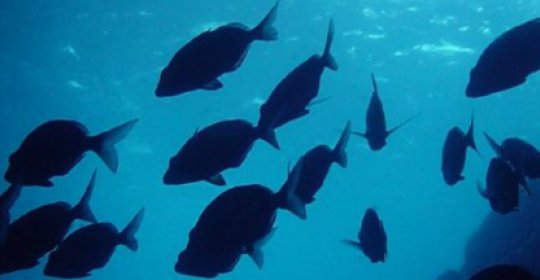
The seabed, following the example of the natural park in general, stands out for being very heterogeneous. This translates into different species being able to adapt perfectly to a very diverse ecosystem that, as expected, is highly protected.
Thanks to divers and other visitors strictly respecting this regulation, the resources of the seabed are still intact today, with some hard-to-see fish being frequently spotted in other parts of the world.
Specifically, certain commercially valuable fish are the best possible example of how well the rules for protecting the local underwater fauna work. Fishermen and divers do not affect the activity of some very common fish in the Montgrí Natural Park, the Medes Islands and the Baix Ter: corvallos, imperial sardines, bass, doradas, grouper, and a long etcetera.
The presence of specific fish and other marine animals in the natural park also leads to the occasional appearance of some pelagic type predators. Among the most common are bluefin tunas and eagle rays.
Beyond fish, one of the reasons that leads many divers to want to explore the seabed is the presence of multitude of corals that are really beautiful in reddish tones, as can similarly be said of gorgonians. The list of coral-like elements also includes sea dates, nacre, and sponges.
All the previously described fauna attracts a species that, from time to time, can also be spotted in the Montgrí Natural Park, the Medes Islands, and the Baix Ter. We refer to the bottlenose dolphins that usually make their presence known in the area in groups of at least ten cetaceans.
Terrestrial
There are many protected bird species that visit this natural park of the Costa Brava, using it as if it were a refuge. A clear example is the rupicolous, as well as both raptor and seabird species.
Both on the islets that are part of the Montgrí Natural Park, the Medes Islands and the Baix Ter, and in the coastal area there are royal owls, western jays, kestrels, and even peregrine falcons. For their part, sparrowhawks and eagles breed in the protected area, taking advantage of the fact that garrigues are ideal for this.
It is noteworthy that there are no other spots in the Catalan autonomous community with as many cave bats, although the species with the greatest abundance is the Cortés gull.
Re-establishing the comparison with other parts of Catalonia, this natural park is one of the places with the highest presence not only of huairavos, but also of common herons and cattle egrets.
Finally, almost fifty percent of the shaggy cormorants in Catalonia can be found in the Montgrí Natural Park, the Medes Islands, and the Baix Ter. This is a result of the holes in certain slopes very close to the coast, which are used for breeding.
Itineraries
Of all the natural parks in the Costa Brava, the Montgrí, the Medes Islands, and the Baix Ter is one of the most varied, as demonstrated by its almost twenty distinct itineraries that can be practiced while hiking or cycling. Whatever your choice, the experience will be unforgettable, as will be the case when following the underwater routes. Below we will describe some of the most recommended itineraries.
From Cala de l’Illa Roja to Cala Moreta
In this natural park, there are a couple of coves connected by a route suitable for both experienced and amateur hikers, as the slope is only 210 meters. However, the duration is considerable, needing just over three and a half hours to cover 13.2 kilometers.
The route starts at Cala de l’Illa Roja, a nudist beach known mainly for its crystal clear water. Eventually, the itinerary ends at Cala Moreta, another area where nudism is also allowed.
From Cala del Salpaig to Punta Ventosa
If you like circular routes that almost everyone can do, you will love this itinerary. In about three hours, it is possible to complete the eleven-kilometer route whose slope reaches 230 meters.
Since it is an itinerary that starts and ends at the same point, Cala del Salpaig, a good idea is to end the activity with a good swim in this beach that is not usually too crowded.
From l’Estartit to the Castle of Montgrí
If you are an experienced hiker and are used to doing somewhat difficult routes, you will be capable of finishing this circular itinerary that requires a physical condition that meets the circumstances. The distance to be covered is almost nineteen kilometers.
The difficulty of the route is also due to the slope that exceeds four hundred meters. All this means that it will take almost six hours to complete the journey, but it is worth it if you want to discover one of the most important elements of the Montgrí Natural Park, the Medes Islands, and the Baix Ter.
How to get there
To get to the Montgrí Natural Park, the Medes Islands and the Baix Ter, the best way is to go to l’Escala or Torroella de Montgrí. The first of the municipalities can be reached by the AP-7, taking exit 5 which subsequently connects to GI-623. If you prefer the second locality, the exit from the AP-7 is 9A. In both cases, you will find very precise indications that will allow you to arrive without problems at the protected space.
Do you prefer public transport? In that case, you will enjoy quite good connections, which start with the train route from Barcelona to Portbou. Taking that line, you need to get off in Figueres. After that, you need to take a bus to the municipal entities that are part of the natural park.
Fees
Enjoying the wide and varied ecosystem of the Montgrí Natural Park, the Medes Islands, and the Baix Ter is free. However, if you want to explore the underwater depths, you will probably have to pay for the activity by hiring the services of a specialized company that provides you with the necessary material to dive into the depths of this highly biodiverse part of the Costa Brava.