The 25 best rated Museums in Alt Empordà
elBulli1846

elBulli1846, located in the beautiful Costa Brava at Cala Montjoi, is more than just a museum; it’s a captivating gastronomic experience that pays tribute to the history and innovation of the famous restaurant El Bulli. With a passionate team led by Lluís García, the visit provides a comprehensive journey through the trajectory of Ferran Adrià and his team, highlighting their impact on the culinary world.
Visitors praise the excellence in service and the friendliness of the staff, who guide with enthusiasm and share valuable anecdotes and stories behind each creation. The attention to detail in the museum’s presentation and organization has received numerous accolades. The experience is a blend of art and gastronomy that enchants everyone who experiences it.
From impeccable facilities to interactive exhibitions and the Sapiens methodology, elBulli1846 stands out as an ideal location for food lovers and culture enthusiasts. It invites reflection, learning, and creativity, turning cooking into a true art form.
A must-visit!Museu del Castell de Peralada

The Museu del Castell de Peralada, located on the Costa Brava, is a cultural destination that should not be missed. It offers an enriching experience for lovers of art, history, and charming spaces. During the guided tour, visitors can access fascinating areas like a refined architectural church, an impressive library with over 100,000 volumes, and various private collections of glass, ceramics, and liturgical objects.
The museum also houses the castle's ancient cellars and a display about the luxury car brand Hispano Suiza, linked to the owning family. The tours are guided and are notable for being very engaging and well-explained, which enriches the experience.
It is important to keep in mind that the gardens can only be visited between July and September. Throughout the journey, it is advisable to book in advance and be punctual, as visits are in small groups and conducted at specific times. Besides the museum, visitors can enjoy the new Peralada wineries and the famous Peralada Festival during the summer.
This is a highly recommended visit, especially for adults and teenagers with cultural interests, and it invites a return visit.
Museu de la Tècnica de l'Empordà

The Museum of Technology of Empordà is a fascinating place located in Figueres, where history and technology intertwine through an impressive collection of antique machines. This museum, with an entry fee of only 3€, offers a completely captivating guided tour, led by the friendly owners who share their passion and knowledge about each artifact.
Among the highlights are:
- A prominent collection of typewriters, considered one of the largest in the world.
- Interesting objects spanning from sewing machines to clocks and other mechanisms from past eras.
- The exceptional attention of the owners, who provide detailed and enriching explanations, ensuring every visitor takes away a memorable experience.
- An inviting and family-friendly atmosphere that encourages exploration and learning for all ages.
Undoubtedly, the museum is a hidden gem that deserves to be visited by those wishing for a journey back in time and a glimpse into technological evolution.

Castell de Sant Ferran

The Castell de Sant Ferran, located in Figueres, is an imposing 18th-century fortress, considered one of the largest in Europe. This majestic monument offers visitors a unique experience to learn about its rich history.
Highlights of the visits include:
- Magnificent building with impressive architecture that deserves to be explored.
- Engaging and well-organized guided tours, with guides providing in-depth and entertaining explanations.
- 4x4 tours and boat rides through the water tunnels, allowing access to less accessible corners of the fortress.
- Serene surroundings that ensure a rewarding and relaxing visit.
- Free parking and easy access for all visitors.
- Opportunity to walk around the fortress on well-marked routes.
It is an ideal place for families, friends, and history enthusiasts who wish to enjoy an unforgettable cultural journey, immersing themselves in the fascinating history of this monumental fortification.
MUME - Museo Memorial del Exilio

MUME - Memorial Museum of Exile is a vital space for understanding an important part of our history. Located in the Costa Brava at Carrer Major 43, CP 17700, this museum offers an educational and moving experience that stands out because of:
- A rich collection of objects, photographs, and documents about exile during the Spanish Civil War.
- Temporary exhibitions that keep the place active and relevant.
- Expert guides providing clear and engaging explanations of historical events.
- A specialized audiovisual space that complements the visitor's experience.
- A bookstore with a selection of titles on the subject of exile.
Visiting MUME is an opportunity to reflect on the past and remember those who suffered due to exile. It is highly recommended for anyone in the area.
Fundación Gala Salvador Dalí
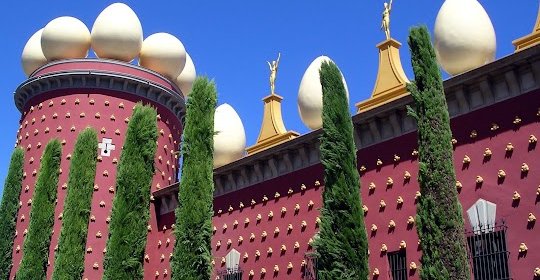
The Gala Salvador Dalí Foundation, located on the Costa Brava, is a must-visit museum that offers a unique immersion into the world of the genius artist Salvador Dalí. This cultural space not only displays his work but also reflects the fusion between the architecture of the old theater and the extraordinary pieces of the artist.
Some of its most notable features include:
- A fascinating surreal experience that transports visitors into Dalí's mind.
- A recommended place for all lovers of art and culture.
- Due to its popularity, it is advisable to book tickets online to avoid long lines and fully enjoy the visit.
Visitors have shared their amazement and gratitude for the experience, noting that this museum is a must in Figueres, perfect for those wishing to delve deeper into Dalí's life and work.
Teatre-Museu Dalí

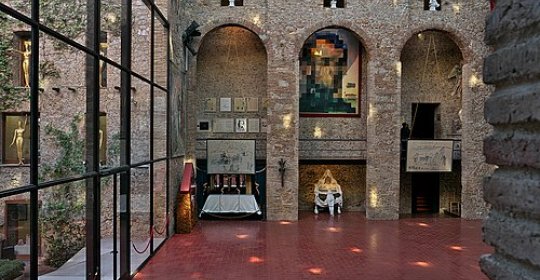
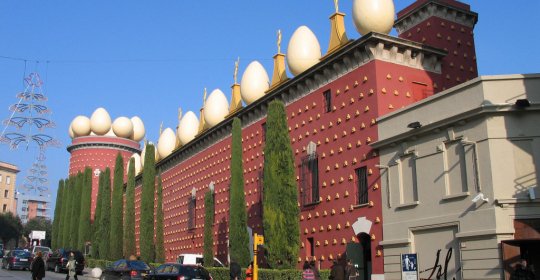

The Dalí Theatre-Museum (4.5 out of 5 rating on Museumspedia.net), the largest surrealist object in the world, occupies the building of the old Municipal Theater, a 19th century building destroyed at the end of the Civil War. On these ruins, Dalí decided to create his museum.
The different collections of the Gala-Salvador Dalí Foundation include works of art of all kinds: paintings, drawings, sculptures, engravings, installations, holograms, stereoscopies, photographs, etc. Of these, some 1,500 are exhibited at the Dalí Theatre-Museum in Figueres.
Under the name of Dalí Theatre-Museum, three different museum spaces are grouped together that offer visitors a free and personal route through their rooms:
- 1) The Theatre-Museum proper, formed by the old Municipal Theater burned down, which becomes a Theatre-Museum based on the criteria and design of Salvador Dalí himself. This set of spaces integrates a single artistic object in which each element constitutes an inseparable part of the whole.
- 2) The group of rooms resulting from the progressive expansions of the Theatre-Museum, in which Dalí's personal intervention is testimonial or non-existent. In these rooms, numerous works from the artist's legacy, stereoscopic works and installations, anamorphisms as well as the new acquisitions of the Foundation are exhibited.
- 3) The Dalí·Joyas showrooms, opened in 2001, with the thirty-nine gold jewels and precious stones from the old Owen Cheatham collection, two jewels executed at a later time and the previous designs made by the painter.
Apart from the creations of Salvador Dalí, you can also see works by other artists whom the painter invited to exhibit in his Museum, such as Antoni Pitxot and Evarist Vallès, as well as pieces belonging to the painter's private collection, signed by artists such as El Greco, Marià Fortuny, Modest Urgell, Ernest Meissonier, Marcel Duchamp, Gérard Dou and Bouguereau. In different spaces of the Theatre-Museum, works by John De Andrea, Wolf Vostell, Meifrèn and Ernst Fuchs are also presented.
Since the death of Salvador Dalí, in 1989, you can also visit the crypt with his tomb, located in the center of the Museum; this space was remodeled in 1997 to house a collection of gold jewelry designed by the artist.
Museu la Ciutadella de Roses
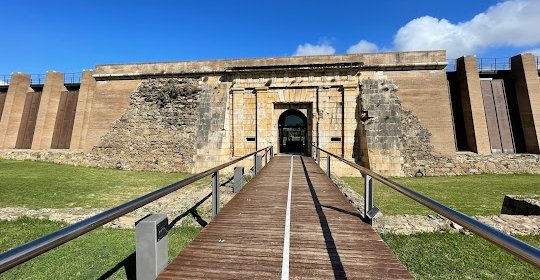
The Museu la Ciutadella de Roses is an impressive cultural space that offers visitors a fascinating journey through the history of Roses and its civilizations. Located on the beautiful Costa Brava, this museum stands out for its well-maintained site of medieval ruins and its small but comprehensive museum, where archaeological finds from various periods, from Greek antiquity to the medieval era, can be appreciated.
Among its strengths are:
- An exceptional natural setting, ideal for walking and enjoying the stunning views.
- Affordable entrance fee, with discounts for students and groups, making it accessible for everyone.
- A friendly and professional staff that ensures a pleasant visit, with special attention at the ticket booth.
- A cultural event program that includes concerts during the summer, making it a lively and dynamic place.
- Interesting temporary exhibitions that enrich the visitor experience.
The Ciutadella de Roses is not only a place to learn, but also to enjoy and explore. It is a must-visit if you are in the area.
Casa - Museu Salvador Dalí
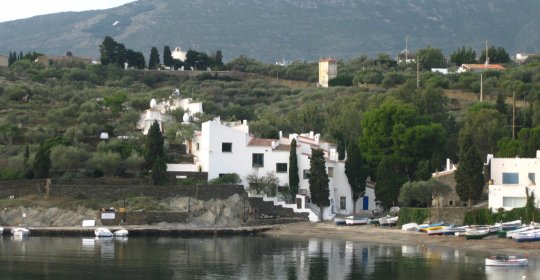
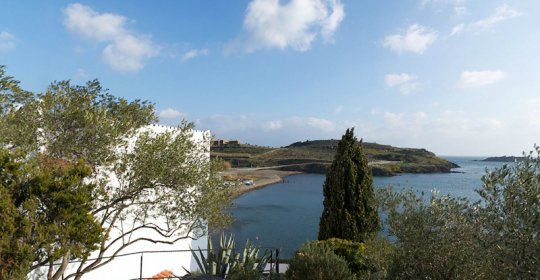
The figure of Salvador Dalí has always been closely related to the Costa Brava. To this day, it remains so, since those who wish to delve into the life of this artist can do so by visiting the house that was his home for more than half a century, which was located in Portlligat.
History of the house
After falling in love with the area, Salvador Dalí did not hesitate to acquire a couple of shacks. After placing his trust in Joaquim Ferrer, a very experienced bricklayer, he gradually shaped a dwelling that stood out mainly for its spectacular sea views.
Years later, both Dalí and his wife Elena Ivánovna, popularly known as Gala, decided to hire Joan Vehí, a prestigious carpenter who took charge of transforming another shack they had just purchased into a kind of library.
Gala passed away in 1982, at which point Dalí decided not to return to his own house. Seven years later, the artistic eminence born in Figueres passed away.
Today it is not a dwelling but rather a museum space shaped by two renowned architects. Currently, the Casa-Museu Salvador Dalí is historically and artistically enjoyed by more than one hundred thousand visitors each year.
What the house-museum is like
The first thing that catches the eye is the labyrinthine aspect of the facilities. A series of hallways that are not very wide lead to several spaces that have no exit, as well as some slopes that can even lead to disorientation.
Each room present in the Casa-Museu Salvador Dalí features openings that vary not only in shape but also in size. This is another demonstration of how much Portlligat enchanted the artist from Figueres, specifically its bay, which was depicted in some of his works and also in his own home.
The house also reflects how much Salvador Dalí liked kitsch trends, in addition to the surrealist style. Both designs can be seen in the three very differentiated spaces that the Casa-Museu has. In the first of them, one can even see intimately how the couple lived in this house.
On the other hand, the studio is another of the spaces that impress visitors the most, as it is possible to see how an artist who marked a before and after worked. Finally, the spaces in the exterior are another area that captures attention.
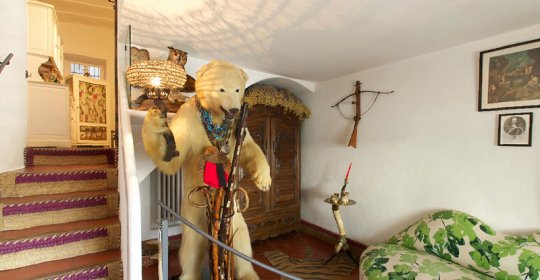
Upon entering the Casa-Museu Salvador Dalí, one enters a room presided over by an element that Edward Frank Willis James gave to Dalí and his wife. It is a bear that was used for various purposes, from keeping umbrellas safe to holding a light point. Near that bear, there is a stuffed bird, specifically an owl, which is a clear example of the couple's passion for the conservation and exhibition of fauna, a discipline known as taxidermy.
After passing through this area, one arrives at the studio. Both the easels and other elements that Salvador Dalí used to unleash his creativity and imagination are still present in this space, with all the utensils being perfectly preserved.
After visiting the studio, it is time to access a room where Nero Claudius Caesar Augustus is represented, specifically with a plaster bust. It was precisely this same artistic element that led him to shape one of his most iconic paintings: Dematerialization of Nero's nose, which was created in 1947.
After enjoying a visit to the studio, one can see a dressing table used by Dalí's wife, as well as a kind of dressing room filled with numerous cabinets. It is not clothes that are present inside these pieces of furniture, but photographs of Gala and Salvador in which they are seen alongside several world-famous celebrities.
Crossing the mentioned space leads to a room called the Oval Room. It was frequented especially by Salvador Dalí's wife, who used it to enjoy one of her main hobbies: reading. In this place, she also hosted various visitors and acquaintances in general.
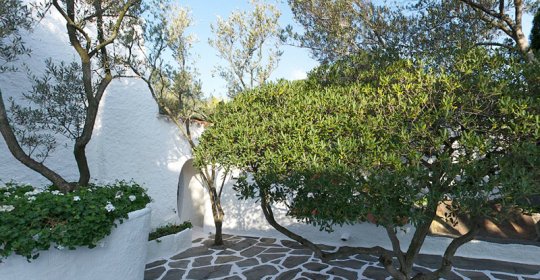
If the Casa-Museu Salvador Dalí captures much attention inside, the exterior doesn't fall behind. Indeed, we are faced with an area that is also well cared for, perfectly demonstrated by the courtyard. Again, access to this space requires passing through a labyrinthine area where there is a dining room that the couple used to have something to eat and drink during the summer season.
In some outdoor spaces, there are ornamental elements of great historical and artistic value. The best possible example is that of the figure Ilisos, created by the sculptor Phidias. The reproduction that Salvador Dalí had and that is still present in the courtyard of his house remains in excellent condition, and the same can be said for the large planters whose shape recreates the appearance of a cup.
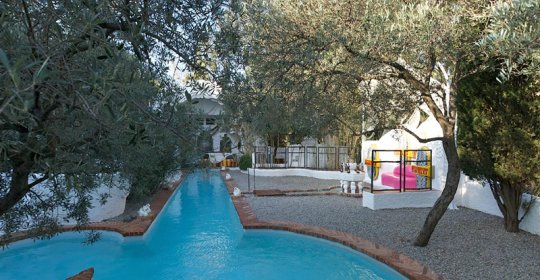
Finally, at the Casa-Museu Salvador Dalí, one can also observe the swimming pool that was built in 1967. It is undoubtedly the point of the house that arouses the greatest admiration. And it's no wonder, as it has many decorative elements that are truly beautiful and original. For instance, in the house's pool, there are a couple of swans from which water flows, as well as a sofa shaped like lips.
Rates
Visiting this museum space in Portlligat costs €18 per individual entry, while if it is reduced, the cost is €11, and it's essential to book in advance to access the Casa-Museu Salvador Dalí.
Ruïnes de Empúries

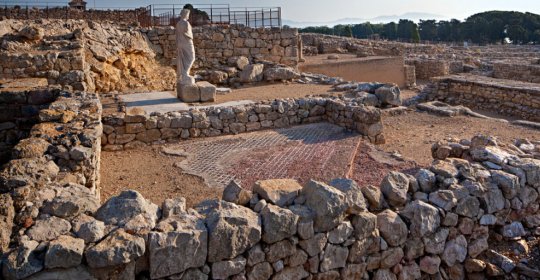
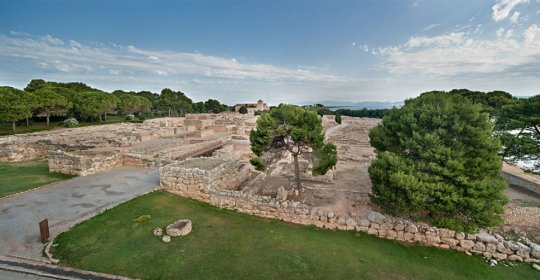
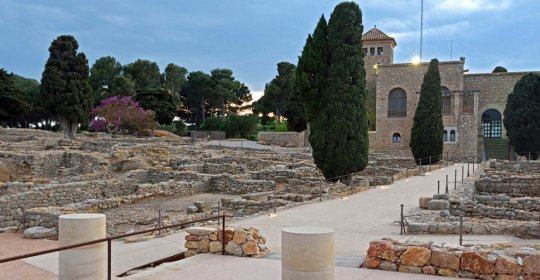
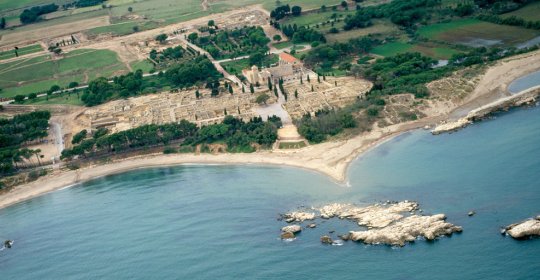
Of all the museums on the Costa Brava, one of the most popular worldwide is undoubtedly the space managed by the Museum of Archaeology of Catalonia. We are referring to the Ruins of Empúries.
Basically, it is an archaeological site where a series of remains belonging to a couple of cities: one Greek and one Roman can be found.
Both cultures first entered the Iberian Peninsula through Empúries, as evidenced by the ruins that are part of the MAC. Precisely on the entire peninsular territory, only one Greek city is preserved, which is actually the one that is partially preserved in the Ruins of Empúries.
Considering that they are over two thousand years old, it is surprising how well these remains have been preserved. This is largely the result of the good maintenance and restoration work that has been carried out over all this time.
Some of the best-preserved elements are undoubtedly the mosaics, which belonged to various noble houses. Something similar can be said about the Roman forum, which has turned into the main point of interest of all the ruins over the years. Even so, there are other elements that also attract a lot of attention from visitors, such as the Greek statue of Asclepius.
It is worth noting that the museum has managed to adapt to current times. This is demonstrated by the QR codes that, when scanned with a mobile device, provide relevant information about what is being viewed.
The audio guides allow visitors to educate themselves, finding out numerous details related to Greco-Roman history. Of course, there are also professionals from the Ruins of Empúries who are in charge of kindly resolving any doubts visitors may have about this museum space.
On the other hand, covering a hundred percent of the ruins that are part of this outdoor museum site in a single visit is not viable if you are short on time. If you want the experience to be full and rewarding, it is advisable to have a couple or three hours, as otherwise, you will not have time to see everything.
Occasionally, experienced archaeologists can be seen in the facilities preparing and performing maintenance tasks, which surprises visitors, who have the opportunity to admire the important work carried out by these specialists.
Not all the exhibits are outdoors. Some works and sculptures are located in a very well-conditioned indoor space. However, it is undeniable that the main attraction of the Ruins of Empúries are the Greco-Roman vestiges.
These ruins are located in Sant Martí d’Empúries, specifically in a privileged site that offers spectacular sea views. Very few museums can boast of offering visitors such an impressive aquatic skyline.
Permanent Collection
At the Ruins of Empúries, two permanent collections can be distinguished, although one of them evolves over the years. We refer to the ruins themselves, which are periodically excavated in greater proportions, now approaching twenty percent of the total. These tasks have been carried out since 1908, and the progress is constant, consisting of a very precise and respectful scientific recovery.
On the other hand, the Archaeological Museum of Catalonia within the ruins has a well-preserved permanent indoor collection.
Activities
Traveling back in time by viewing the ruins, enjoying the sea views, and marveling at the excellent condition of the elements that make up the permanent collection are not the only activities available. Other popular options include theatrical guided tours.
On the list, you should also add the concerts that take place in the forum. Additionally, workshops, which are ideal for families with children, should not be overlooked.
Prices
The general entrance fee is 6€, reduced to 4€ for seniors, pensioners, students, large families, or single-parent families.
There is the possibility of accessing the Ruins of Empúries for free. Those who can enjoy free entry are those under 16 years of age, unemployed, and disabled individuals.
Anyone can visit the ruins for free on the first Sunday of every month, except for July, August, and September.
Since it is a very successful museum, having become a reference on the Costa Brava, the parking lot tends to be quite full. Luckily, there are two different parking options: one paid and one public with free access, although the latter usually has no available spots. If you want to park for free at the Ruins of Empúries, it’s best to arrive with plenty of time in advance.
Museu del Joguet de Catalunya
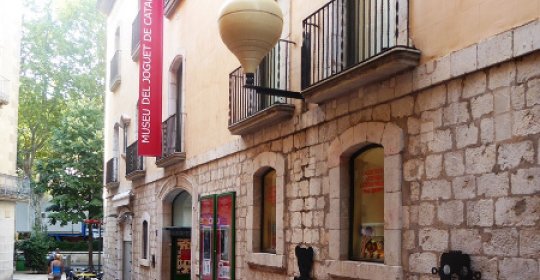
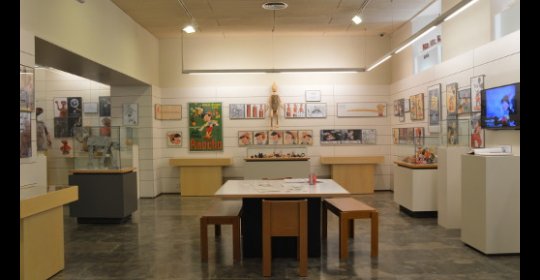
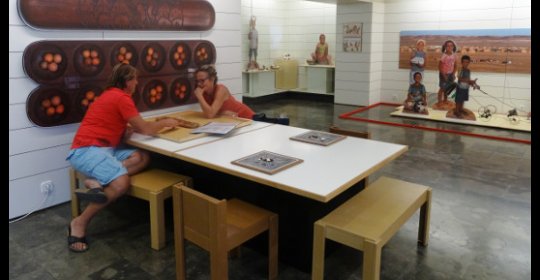
In the Costa Brava, there are several museums that are ideal for visiting with family. One of the most popular is the one known as the Museu del Joguet de Catalunya, which was inaugurated in 1982.
The building chosen to house this museum was constructed in the mid-18th century. It was a house belonging to an influential baron, later converted into the Hotel París. Eventually, it was opted to transform it into a museum space, which has proven to be a very good decision, as demonstrated by the passage of time.
And it is that annually the Museu del Joguet de Catalunya receives thousands of visitors, although initially it was a private facility. Everything changed when a foundation emerged that, in the late 20th century, decided not only to renovate the facilities but also to adapt them so that all children and adults who visited this space would feel comfortable, having a unique experience.
Ground Floor
This museum has three floors. Upon entering the ground floor, there is a point where information of interest is provided, as well as an area that children of all ages enjoy. We are referring to that space that is designated for children to unleash their creativity and imagination by drawing or coloring.
On the same ground floor, there is another area that deserves special mention. This is an open room where all kinds of activities are organized from time to time. In this case, these are not only intended for the smallest in the house but also for adults. In addition to presentations and workshops, there is a series of exhibitions, which are temporary and do not require any payment. Indeed, they are free.
First Floor
The first floor of the Museu del Joguet de Catalunya is dedicated to showcasing toys that were enjoyed in ancient times. It is striking how well preserved all of them are.
It is common for toys to undergo a certain deterioration, especially when they have many years behind them. However, the toys displayed on the first floor of this museum space seem to show no signs of wear due to the passage of time.
Thanks to how spacious the first floor is, it not only accommodates toy exhibitions. To top it off, there is a playroom that is synonymous with pure fun.
Second Floor
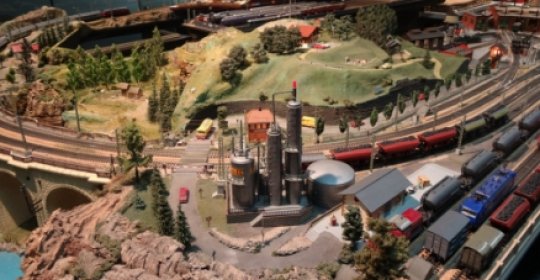
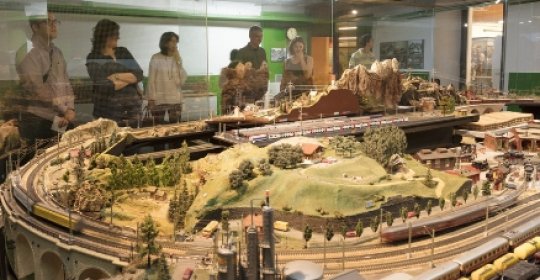
We finish with the last of the floors, which for many visitors is the most spectacular of all. And it's no wonder, as it features a model railway of the analog type that took nearly two decades to construct.
The overhead wire is used for locomotives to travel along a well-thought-out circuit by a train enthusiast: Andreu Costa. Thanks to the maintenance provided by the professionals at the Museu del Joguet de Catalunya, it continues to operate perfectly to this day.
The various sections that are scenically represented at scale are especially surprising for their high level of realism, which is the result of dedicating a lot of time to placing details like trees, hills, factories, and more.
Collection
The collection of the Museu del Joguet de Catalunya is spectacular in every sense. Even those who are not toy lovers cannot help but be surprised when contemplating the various elements that are part of it, especially those with great historical value. A clear example is the teddy bear that Salvador Dalí used to play with, a prominent artistic figure closely related to the Costa Brava.
Visitors admiring the collection experience two distinct sensations. The first is nostalgic, as many adults remember those toys they enjoyed decades ago. The children themselves also show amazement at seeing how their parents and grandparents had fun with the various elements they see in the museum.
On the other hand, the sensation of being cultured is also very present in each visitor. This is not surprising, as throughout the tour of the various floors of the Museu del Joguet de Catalunya, one can internalize the advances not only of a scientific nature but also at a technical level, which occurred over many years.
The richness of the collection that is part of the museum space and how well preserved it is have led these facilities to receive important awards, as well as general recognition. One of the most significant is the IPA Spain award received in 2009, in addition to the Sant Jordi Cross awarded to the museum by the Generalitat in 2007.
Prices
The general admission ticket costs €7. The reduced ticket costs €5.60, while groups only have to pay €5 for each member.